


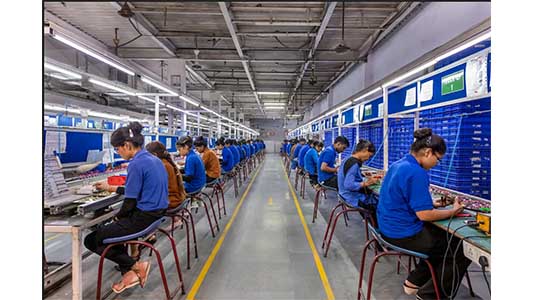
When you flip on a switch in India, the glow of an LED lamp signals not just progress but also a critical moment of choice. The Indian LED lighting market is burgeoning, projected to grow from US$4.7 billion in FY 2024 to nearly US$7 billion by 2030. Yet, despite this growth, India’s lighting manufacturing remains heavily dependent on imports for over 60% of critical components like chips and phosphors. This creates a vulnerability that global disruptions, from geopolitical tensions to semiconductor shortages, can quickly exploit. To secure its future, India’s lighting industry must do more than adapt; it must innovate boldly, reshaping supply chains, workforce capabilities, and technological frontiers to become a global trailblazer.

The first step is a national pivot toward deep innovation in LED component manufacturing. India must invest in R&D hubs dedicated to semiconductor chip design, advanced phosphor materials, and smart lighting technologies. Government incentives like the PLI scheme should reward companies that develop in-house capabilities and patent green lighting innovations. Public-private partnerships can accelerate this by aligning industry leaders with academic research and start-ups focused on next-generation lighting solutions.
Identifying the Gaps
These disruptions underline persistent gaps in the industry’s value chain. Import dependency remains the most significant challenge, with estimates suggesting that more than 60% of LED components used in India are sourced globally. Logistics costs, at 13–14% of GDP, further inflate manufacturing expenses compared to international peers. On the technology side, adoption of AI-based demand forecasting, IoT-enabled inventory tracking, and blockchain-backed transparency is still limited, particularly among mid-sized players. Finally, workforce preparedness remains a pressing issue; specialized skills in electronics design, testing, and automation are in short supply, despite ongoing skilling programs.
Turning Challenges into Opportunities



The flipside of disruption is the opportunity to reset. Lighting manufacturers are increasingly focusing on backward integration, expanding domestic component capabilities, and diversifying supplier bases. Policy enablers such as the Production-Linked Incentive (PLI) scheme for electronics and semiconductors, along with India’s broader push for critical mineral independence, provide strong levers for building resilience. Government agencies like BIS and BEE should actively steer demand toward 5-star rated lamps, discouraging inefficient, cheaper 1-star products through clearer labeling and enforcement. If 5-star products are standardised and supported with targeted subsidies, users save on bills while the country cuts peak load and emissions. Parallelly, digital platforms are being leveraged for real-time visibility, allowing companies to predict and adapt to supply constraints faster. Importantly, sustainability is becoming a strategic advantage—circular supply chains, recyclable materials, and energy-efficient production are not just regulatory necessities but differentiators in global markets.
Driving Higher ROI with Workforce Training
For the lighting sector, where precision and innovation are vital, people remain the backbone of resilience. Investments in workforce training must move beyond assembly-line skills to include electronics engineering, IoT integration, and digital adaptability. Public–private partnerships can bridge gaps between policy and industry requirements, ensuring that training translates into measurable efficiency gains. When employees are empowered with cross-functional knowledge and digital skills, they not only respond better during crises but also contribute to long-term innovation delivering higher ROI for manufacturers.
The Future of Strategy is Followed Diligently
If these strategies are embraced with intent, the lighting manufacturing industry in India has the potential to redefine its global positioning. A resilient, diversified supply chain, supported by advanced technologies and a skilled workforce, will ensure disruptions no longer derail progress. Instead, they will act as catalysts for greater agility, efficiency, and innovation. A national push to standardise 5-star lighting—backed by BIS/BEE norms and modest incentives can accelerate adoption at scale, lowering lifecycle costs for households and industry while easing pressure on the grid. This transformation could enable India to evolve from being one of the largest lighting markets to also becoming a trusted global hub for sustainable, smart, and technologically advanced lighting solutions.
(The author of the article, Mr. Abhishek Malik is the Executive Director at Calcom Vision limited. The views expressed are personal)