

Semiconductors power today’s technology, from smartphones and computers to vehicles and home appliances. However, as modern devices become smaller and more portable, traditional monolithic chips are struggling to keep up because of their size-dependent performance.
Chiplets offer an innovative solution with their scalable and flexible architecture. While widespread adoption is still a work in progress, developments show that it may only be a matter of time before these small semiconductors become mainstream.


What are Chiplets?
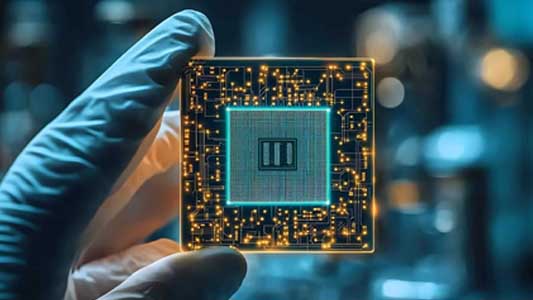
A chiplet is a small and modular chip that specializes in a single function. Combining them with different functions can result in a complex system-on-chip (SoC) or multi-die design. Here are some examples of what it can be used for:
- A processing unit or CPU
- A computing unit or GPU
- A memory block
- An I/O driver
- An AI accelerator
Chiplets can revolutionize the semiconductor industry, as they allow engineers to achieve higher performance levels without a complete overhaul. They accomplish this feat by integrating multiple homogeneous and heterogeneous dies into a single unit using interconnects and packaging technologies.
Interconnects facilitate low-latency and high-bandwidth data transfer between heterogeneous chiplets. A good example is the universal chiplet interconnect express (UCIe), which is an open industry standard interconnect. Packaging techniques combine several chips. For instance, with 2.5D and 3D packaging, engineers place the chips side by side or stacked on top of each other
Why Are Chiplets Gaining Momentum?
Chiplets divide the system on a chip into composite, functional blocks. Because the functions are separate, engineers can optimize each die without affecting the others. While there are limits, they can also mix and match technologies to create more efficient combinations. The benefits make these small semiconductors a better option than monolithic chips, which are what most computer systems have.
Understanding the Drawbacks of Monolithic Architecture
Before chiplets, most computer systems had a monolithic design, in which a single unit or die contained all functionalities. The unit centralizes operations and relies on a single database.
The problem is that a monolithic design forces many trade-offs and needs to become bigger and more complex to achieve high-performance processing. Its yield decreases as its size increases because the risk of one part failing and affecting the others becomes greater, which can result in expensive redesigns.
Moreover, monolithic system components are tightly coupled on a silicon platform, which means small changes in one aspect would affect others. This makes even the simplest updates on a peripheral slow and complex.
Developing a high-performance monolithic processor involves upgrading all its components, including the CPU, GPU, memory and peripherals. Some aspects may need special technology, while others might require higher voltage. After improving each one, engineers must integrate them into a single unit and ensure they operate well together.
The Rise of Chiplet-Based Technologies
Chiplets provide a way to overcome the limitations of monolithic chip designs, and many companies are taking advantage of this. AMD was one of the first to integrate this tech into its products when it launched its first-generation EPYC CPUs in 2017.
AMD’s gamble paid off, as the company soon became synonymous with high-performance computing processors. Intel soon followed suit with its Meteor Lake and Sapphire Rapids processors. Other tech titans that are integrating chiplets include NVIDIA, Samsung Electronics and Taiwan Semiconductor Manufacturing Co.
The 2025 Chiplet Summit, which focused on industry developments and opportunities, reported nearly double the attendance compared to the previous year. With continuous innovations from both tech leaders and startups, the next summit may welcome even more participants.
Advantages of Chiplet-Based Design
Chiplets address the limitations of monolithic semiconductor designs with the following benefits:
Reticle-limit bypass: The largest chip that can be made in one piece on a silicon wafer is 858 millimeters squared, but chiplets allow engineers to circumvent that limit.
Focused optimization: Designers can upgrade one unit’s function and improve the SoC’s performance and power efficiency without adjusting other chiplets.
Modular updates: Engineers can replace the chips or add new ones for more functionality as needed without overhauling the setup.
Design flexibility: Engineers can integrate a chip into multiple designs, allowing them to mix and match IP blocks and process nodes.
Customization: The chips can be configured to meet specific application needs.
Strategic positioning: Chiplets come as small as 5nm to 3nm, with 2nm and 1 nm chips on the horizon. Using precision control systems, engineers place them as close as possible to reduce power consumption and latency.
Heat dissipation: Because chiplets are small, they can efficiently disperse heat and reduce the package’s power density.
Yield improvement: Smaller dies mean higher yields and lower defect rates.
Cost efficiency: Reusing chiplets allows companies to gradually reduce costs across different products. It also reduces the time involved in making new units for testing and development.
Faster time to market: Building the first chiplet may take a lot of time and money, but engineers can create multiple iterations from it, resulting in a shorter time to market.
Challenges of Adopting Chiplet Architecture
Despite their benefits, chiplets have yet to become mainstream. Here are some of the reasons why:
- Increased data complexity: Connecting independent chiplets requires more complex engineering than monolithic chips. In some cases, designers need to develop new tools and intricate integration to combine the units.
- Packaging limits and costs: Chiplet-based designs rely on complex packaging techniques, which can come at a price, like 3D integration. These methods are also often expensive, which means only well-funded organizations can utilize them.
- Communication delays: Fast and consistent data transfer between chips is essential in a multi-chiplet system. However, current cache coherency protocols might not be able to keep up with the increasing inter-die bandwidth and complex interconnects. The chips might also use different cache protocols, which would require bridging solutions.
- Higher latency: Chiplets are separate units, and any distance between them can increase communication latency and bandwidth. Delays can occur if the data must travel through many interconnects and bridges to reach its destination.
- No standardization: While UCIes exist, the industry has yet to set universally adopted interconnect protocols, which limits interoperability between the small chips from different companies. The absence creates a bottleneck for collaborative innovations.
What Is Next for Chiplets?
Despite these adoption challenges, more companies are diving into the technology. With their trajectory, the future of chiplets might include the following.
More Companies With Internal Chiplet Ecosystems
Industry leaders are not stopping anytime soon from leveraging these small chips for their products. Intel’s fully integrated optical I/O chiplet, which supports 64 channels of 32 Gbps, demonstrates how the tech can empower data centers and AI infrastructure with high-speed data transmission. Meanwhile, each new iteration of NVIDIA AI GPUs and AMD Ryzen CPUs shows how the companies are constantly finding new ways to use the small semiconductors to empower their solutions.

The gap between releases is not as long as it was between the first few because these companies have started growing internal chiplet ecosystems. These often combine open standards and proprietary technologies. or example, AMD’s intermediate third-party die and third-party adapted die programs allow it to support both internal and external integration. As a result, vendors can incorporate specialized I/O chiplets and accelerators with the company’s core tech.
In the future, other companies that develop product lines with their own chiplets will likely create internal ecosystems. Whether their units can collaborate with those of other companies will depend on their business roadmaps.
Chiplet Adoption in Different Industries
Chiplets can benefit almost every sector that utilizes computer processing units, from consumer electronics like smartphones to health care devices like medical imaging equipment. Some sectors, like the automotive industry, have already started adopting the technology.
Vehicles have many modules or electronic control units. Like chiplets, each unit manages specific functions, like transmission and braking, frequently exchanging data to ensure smooth operation. This similarity makes adoption easier, though it may take some time to see a software-defined car on the market.
In 2023, MediaTek and NVIDIA announced a collaboration to integrate the latter’s CPU chiplet into the former’s auto platform. A year later, Renesas, which specializes in semiconductor solutions, unveiled the first automotive SoC powered by the small chips.
Integrating Chiplets Is Embracing the Future
Chiplets are more than solutions to the limits of monolithic chips. They expand the technology’s capabilities and open more opportunities for innovation. Several challenges are slowing adoption, but those are common for revolutionary advancements. With multiple companies developing and exploring their integrations, it may only be a matter of time before they bypass those hurdles and start transforming industries.