



Vice President – Semicon BU
MosChip Technologies
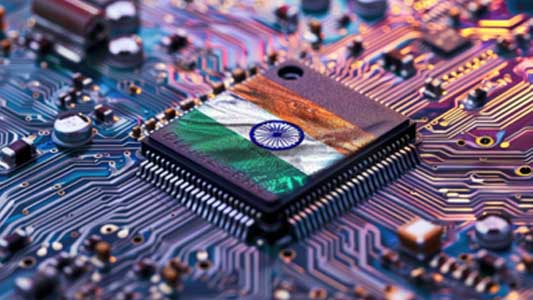
The Indian semiconductor market has grown from USD 38 billion in 2023 to an estimated USD 45 to 50 billion in 2024-2025. It is expected to reach around USD 119 billion by 2030, with a 15% Compound Annual Growth Rate (CAGR) as stated in the Press Information Bureau by the Government of India (GOI).
With the convergence of AI, 5G, IoT, electrification, and edge computing, the demand for silicon design, manufacturing, testing, and embedded systems is accelerating. What was once a market driven by consumption is now transforming into a hub for design, innovation, and advanced manufacturing. India’s journey from being a talent center to becoming a semiconductor powerhouse is not just aspirational—it’s already in motion.
Strategic market opportunities
Strategic market opportunities for India’s semiconductor industry are clear and growing.
The automotive sector stands out as a major driver because global car manufacturers are now inclined towards designing their own System-on-Chips (SoCs). This has increased the demand for automotive-grade semiconductors that follow safety and performance standards. The rise of EVs, ADAS, and connected cars also pushes the demand higher. On the other hand, digital infrastructure is expanding quickly, which demands efficient and high-performance chips for cloud computing and managing AI workloads. High-performance computing is offering transformative opportunities as well. Early adoption of RISC-V processors puts India in a strong position.
The move towards distributed computing, edge processing, and designs optimized for specific tasks is changing the market.

Where India Stands?
India is steadily building a solid semiconductor ecosystem supported by strong government initiatives and growing industrial investments. Several manufacturing facilities are underway or approved, spread across the nation. These include advanced fabrication units, assembly and testing centers, which are vital for sectors including automotive, data centers, telecommunication, and many more.
In May 2025, India marked a milestone with the opening of two state-of-the-art semiconductor design centers (part of Renesas Electronics India pvt. Ltd.) in Noida and Bengaluru, focusing on advanced 3nm technology. This achievement portrays the nation’s growing expertise in chip innovation.
The foundation of India’s semiconductor ambitions rests on two primary pillars. First, the strong network of MSMEs producing essential semiconductor components, which strengthens fabrication capabilities across the country. Second, the services ecosystem involving companies like MosChip, leveraging India’s semiconductor skilled talent pool for designing next-gen chipsets across domains.
Government initiatives and ecosystem collaboration
India’s policy framework has evolved to support comprehensive ecosystem development rather than isolated incentive programs. The Design Linked Incentive (DLI) scheme represents a particularly effective approach, providing financial support for semiconductor design projects while ensuring access to essential infrastructure, including Electronic Design Automation (EDA) tools and intellectual property (IP) cores.
This systematic support enables startups and smaller companies to participate meaningfully in advanced semiconductor development while reducing barriers to commercialization. The scheme’s success in facilitating prototype development, securing venture capital funding, and enabling foundry partnerships that demonstrates the value of coordinated policy intervention in complex technology ecosystems.
Collaboration with premier research institutions, including the Centre for Development of Advanced Computing (C-DAC) and other government laboratories as part of India’s Semiconductor Mission, creates pathways for translating advanced research into commercial applications. Projects focused on indigenous high performance computing processor development, specialized application areas like smart energy meter IC, surveillance and motor control demonstrating domestic capability building, elevating India’s semiconductor growth journey.
Building supply chains and ecosystem partnerships
The future success of India’s semiconductor industry depends critically on developing resilient supply chains that can withstand global disruptions while maintaining cost competitiveness and quality standards. This requires systematic investment in domestic capabilities for critical materials, manufacturing equipment, and specialized services that support semiconductor operations.
Strategic partnerships across the value chain with foundries, Electronic Design Automation vendors, intellectual property providers, and system companies ensure access to leading-edge technologies while building collaborative relationships that can evolve with changing market requirements. The emphasis on ecosystem development recognizes the success of this industry.
India’s semiconductor industry stands at a unique intersection where global disruptions create opportunities for new market entrants while technological shifts demand fresh approaches to design, manufacturing, and system integration. The country’s combination of engineering talent, policy support, and market opportunities creates conditions for meaningful participation in global semiconductor value chains. Success in this environment requires sustained commitment to capability building, systematic talent development, and strategic focus on high-value market segments where India can provide differentiated value.
The transformation ahead demands deep capabilities that can compete globally, and capitalize on current market opportunities before they shift elsewhere. India’s semiconductor future depends on how effectively the ecosystem can balance these competing demands while maintaining focus on long-term strategic objectives that serve both national interests and global market requirements.
MosChip’s role is to be a catalyst for this industry, enabling innovative ideas to move from concept to silicon faster, and creating a culture where innovation is continuous, collaborative, and impactful. We offer end-to-end full cycle ownership from ASICs to AI.