

Electronics Era

  • About Us
  • Advertise with Us
  • Contact Us
  • e-Mag
  • Webinars
Header logo on website
Advertisement
Advertisement
Menu
  • Home
  • News
    • Industry News
    • Product News
  • TECH ROOM
    • Sensor
    • VR / AR
    • Embedded
    • Medical Electronics
    • Industry 4.0
    • Robotic
    • Automation
    • Smart Machine
    • Component
    • MCU
    • Manufacturing
    • Aerospace & Defence
    • Security
    • Policy
    • RENEWABLES
      • Sustainability
  • Semiconductor
    • AUTOMOTIVE ELECTRONICS
      • EVs
      • HEVs
      • ADAS
      • Connected Cars
    • IoT-Internet of Things
      • Development Kit
      • IoT Design
    • Power Electronics
      • AC-DC/DC-DC Converters
      • Mosfets
      • IGBTs
      • LEDs
  • T & M
    • 5G testing
    • Oscilloscopes
    • SDN & NFV
    • RF & Wireless
  • AI/ML
  • Telecom
    • 5G/6G
  • Future Tech
    • Data Center
    • Cloud Computing
    • Big Data Analytics
  • Webinars
  • Editor’s Pick
    • Tech Article
    • Tech Blog
    • White Papers
    • EE-Tech Talk
    • Market Research
    • Videos
  • EE Awards
    • EE Awards 2025
    • EE Awards 2024
  • MORE
    • E-Mag
    • Events
    • MAGAZINE Subscription
    • Contact Us
Home Semiconductor

Bosch Introduces Third Generation SiC Chips for EV Growth and Local Ecosystem Enablement

Nimish by Nimish
June 9, 2026
in Semiconductor
Reading Time: 3 mins read
Bosch

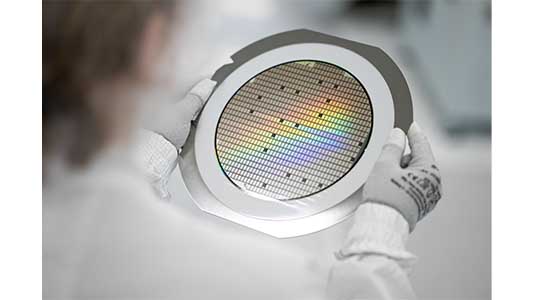
Bosch introduces third generation SiC chips

Share on FacebookShare on TwitterShare on LinkedIn

The new generation of SiC chips deliver 20 percent higher performance

More than 60 million SiC chips already delivered worldwide

Bengaluru, India – As India accelerates its transition to electric mobility, the focus is shifting from adoption to scale, efficiency, and affordability. Bosch is set to support this next phase with the introduction of its latest third-generation Silicon Carbide (SiC) semiconductors in India. Designed to improve the performance and efficiency of electric vehicles, the new chips will also contribute to the development of a stronger local mobility ecosystem.

Silicon carbide (SiC) semiconductors are central to improving the efficiency of electric vehicles. They control the flow of energy within the power electronics system – particularly in the inverter and ensure that energy from the battery to the electric motor is converted as efficiently as possible. With this new generation, Bosch is delivering approx. 20% higher performance, supporting India’s rapidly growing EV market. For the end-user, this means longer driving ranges without larger batteries, improved battery utilization, and ultimately, a lower total cost of ownership.

“Our advanced SiC technology is designed to deliver the tangible benefits that Indian consumers demand – longer driving range, faster charging, and lower long-term costs.” said Sandeep Nelamangala, Joint Managing Director, Bosch Limited, and President, Bosch Mobility India. “By making high-efficiency power electronics more accessible, we are helping to unlock the full potential of the EV market, making clean, efficient mobility a reality for everyone in India.” 

With over 60 million SiC chips already delivered worldwide, Bosch brings proven power semiconductor expertise to support the next phase of India’s electrification journey. The company continues to invest billions of euros in expanding its global semiconductor capabilities, creating a strong foundation for innovation, supply resilience, and future growth. As India advances its ambitions in electric mobility, localization, and advanced manufacturing, Bosch aims to support customers and ecosystem partners by bringing together global semiconductor expertise and local ecosystem development.

With its third generation of SiC chips, Bosch is taking this technology to the next level. “Our ambition is clear: we want to be a globally leading manufacturer of SiC chips,” said Markus Heyn, member of the Bosch board of Management and chairman of the Bosch Mobility business sector. “With our next generation SiC chips, we are helping our customers put even more powerful and efficient electric vehicles onto the road.” 

Bosch’s Gen 3 SiC technology enables more compact and efficient power electronics designs by reducing energy losses, improving thermal performance, and lowering system complexity and cooling requirements. Miniaturization is a key enabler for long-term cost efficiency, as it allows more chips to be produced per wafer. In this way, Bosch is contributing to making high-performance electronics more widely accessible.

These combined advantages make advanced power electronics relevant not only for premium vehicles, but also for mass-market EV segments where efficiency, affordability, and reliability are critical. 

With this strategic introduction, Bosch is bringing advanced semiconductor innovation closer to the needs of India’s evolving mobility landscape and supporting the next phase of efficient, scalable, and sustainable electric mobility in the country.


Tags: BoschSiC chips
Nimish

Nimish

Join Our Newsletter

* indicates required
Electronics Era

Electronics Era, India's no.1 growing B2B news forum on Electronics and Cutting Edge Technology is exploring the editorial opportunity for organizations working in the Electronics Manufacturing Services(EMS) Industry.

Follow Us

Browse by Category

  • 5G testing
  • 5G/6G
  • AC-DC/DC-DC Converters
  • ADAS
  • Aerospace & Defence
  • AI/ML
  • Automation
  • AUTOMOTIVE ELECTRONICS
  • Big Data Analytics
  • Blockchain
  • Cloud Computing
  • Component
  • Connected Cars
  • Data Center
  • Editor's Desk
  • EE-Tech Talk
  • Electronics Components
  • Embedded
  • EVs
  • Future Tech
  • HEVs
  • Industry 4.0
  • Industry News
  • IoT Design
  • IoT-Internet of Things
  • LED & Lighting
  • LEDs
  • Manufacturing
  • Market Research
  • MCU
  • Medical Electronics
  • Mosfets
  • News
  • Oscilloscopes
  • Policy
  • Power Electronics
  • Product News
  • RENEWABLES
  • RF & Wireless
  • Robotic
  • SDN & NFV
  • Security
  • Semiconductor
  • Sensor
  • Smart Machine
  • SMT/PCB/EMS
  • Sustainability
  • T & M
  • Tech Article
  • Tech Blog
  • TECH ROOM
  • Telecom
  • Uncategorized
  • VR / AR
  • White Papers

Recent News

Würth Elektronik

Würth Elektronik and the University of Valencia Celebrate Ten Years of Collaboration

June 9, 2026
Frenetic

Frenetic Magnetics Design Platform now Includes Support for Planar Transformers Plus Thermal Modelling

June 9, 2026
  • About Us
  • Advertise with Us
  • Contact Us

© 2022-23 TechZone Print Media | All Rights Reserved

No Result
View All Result
  • Home
  • News
    • Industry News
    • Product News
  • TECH ROOM
    • Sensor
    • VR / AR
    • Embedded
    • Medical Electronics
    • Industry 4.0
    • Robotic
    • Automation
    • Smart Machine
    • Component
    • MCU
    • Manufacturing
    • Aerospace & Defence
    • Security
    • Policy
    • RENEWABLES
      • Sustainability
  • Semiconductor
    • AUTOMOTIVE ELECTRONICS
      • EVs
      • HEVs
      • ADAS
      • Connected Cars
    • IoT-Internet of Things
      • Development Kit
      • IoT Design
    • Power Electronics
      • AC-DC/DC-DC Converters
      • Mosfets
      • IGBTs
      • LEDs
  • T & M
    • 5G testing
    • Oscilloscopes
    • SDN & NFV
    • RF & Wireless
  • AI/ML
  • Telecom
    • 5G/6G
  • Future Tech
    • Data Center
    • Cloud Computing
    • Big Data Analytics
  • Webinars
  • Editor’s Pick
    • Tech Article
    • Tech Blog
    • White Papers
    • EE-Tech Talk
    • Market Research
    • Videos
  • EE Awards
    • EE Awards 2025
    • EE Awards 2024
  • MORE
    • E-Mag
    • Events
    • MAGAZINE Subscription
    • Contact Us

© 2022-23 TechZone Print Media | All Rights Reserved

Advertisement
Advertisement