Soaring fuel costs are doing what years of policy nudges couldn’t making EV commercial vehicles the obvious economic choice
Author: Mr. Rajkiran Kanagala, President & Chief Business Officer, TCI


Diesel crossed ₹100/litre. Electricity sits at ₹6-10/kWh. If you’re running a commercial fleet and that gap doesn’t make you rethink your next vehicle purchase, nothing will.
The West Asia fuel shock of 2026 has changed the EV conversation in India not by making electric vehicles more attractive in theory, but by making diesel visibly, painfully expensive in practice. The case for electrification no longer needs to be argued. It’s being felt.
THE OIL COMPANY PROBLEM
India’s state-owned oil marketing companies have spent years acting as price shock absorbers delaying retail revisions, absorbing the hit, and hoping global crude stabilizes. That model is breaking. With Brent crude forecast to average $86/barrel through 2026 up from $69 in 2025 and Goldman Sachs warning of $100+ if the Hormuz disruption drags on, the losses are no longer deferrable.
Every revision passed through to pump prices is another push toward the EV tipping point. For a sector that moves goods across 14 billion tonne-kilometre of road freight every year, the math compounds fast: freight rates rise, margins compress, consumer prices follow. The political economy of cheap diesel is quietly unravelling and fleet operators know it.
THE NUMBER THAT CHANGES EVERYTHING
A diesel truck averaging 3-4 km/litre spends ₹22–30 per km on fuel. An electric truck at 1.5 kWh/km spends ₹9-15 per km. That is a 30–50% running cost advantage per kilometre, before accounting for fewer oil changes, simpler drivetrains and regenerative braking extending brake life.

ICCT research confirms that with purchase subsidies, interest subventions, and toll waivers, TCO parity between electric and diesel trucks in the 12–28 tonne segment is achievable in India right now for well-structured urban and sub-urban fleets.
“The potential savings on fuel range between 30% and 50%. Electric trucks also incur lower maintenance costs due to fewer parts and no need for oil changes.”: – The Climate Group – Electric Trucks India Analysis, 2025
THE MARKET IS ALREADY MOVING
This isn’t theoretical. Over 500 electric heavy commercial trucks were sold in India in 2025 beyond pilot programmes, into early commercial deployment. Tata Motors, Ashok Leyland and Eicher have all expanded their EV commercial portfolios for 2026, with models spanning last-mile three-wheelers to multi-axle freight carriers.
Delhi-NCR, where new diesel fleet vehicles now face restrictions, has become the proving ground. E-commerce operators running vehicles on fixed urban routes are finding EV economics compelling even without subsidies. Battery costs are projected to fall 65% by 2040 and TCO parity for most truck segments is expected by 2026-2028. The transition isn’t coming. It’s here, for the right corridors.
THE POLICY RUNWAY
The Indian government has built serious scaffolding. FAME I to FAME II (₹10,000 crore) to PM E-DRIVE (₹10,900 crore, extended through March 2028). The policy signal has been consistent for a decade and it is getting louder.
India’s stated target is 70% of commercial vehicles electric by 2030. Ambitious, but the policy architecture is beginning to match the ambition.
“By combining performance-based subsidies, demand-side incentives, and targeted ecosystem support, the Indian government has nurtured an increasingly robust investment environment for electric commercial vehicles.”: – EMobility Academy – Government Investment Incentives for EVs in India, 2025
WHAT WE’RE DOING AT TCI
At TCI, sustainability is a commercial strategy, not a CSR footnote. Our approach runs on three tracks: Avoid, Shift, Improve cut unnecessary freight movement, shift cargo to rail and coastal where economics allow and decarbonize what remains on road.
For our fleet, we are integrating CNG and LNG as bridging fuels for medium and long-haul operations, while deploying EVs in urban corridors where the economics are proven. Our warehousing estate is progressively adopting rooftop solar and energy‑efficient building systems. We use the Transportation Emissions Measurement Tool (TEMT) to track “well-to-wheel” emissions. Developed by the TCI–IIM Bangalore Supply Chain Sustainability Lab, this enables rigorous, data-driven decision-making rather than reliance on aspirational targets.
A critical pillar of our decarbonization strategy is the active shift of cargo from road to rail and coastal waterways. Rail freight emits roughly one-fifth the carbon of trucks per tonne-kilometre, a 5x carbon efficiency advantage that no fleet upgrade alone can replicate.
TCI is systematically moving freight to rail wherever corridor economics and timelines allow and leveraging India’s coastline for bulk cargo through coastal shipping routes. This is not a future aspiration, it is a present operational priority that reduces our Scope 3 emissions at scale. We are also actively working to bridge the first-mile and last-mile connectivity gaps at railheads, a structural bottleneck that has historically slowed modal shift across the industry. Our multimodal capability spanning road, rail and coastal allows us to design supply chains where the lowest-carbon mode handles the longest leg and road freight is reserved for what it does best: flexible, last-mile delivery.
We are also running a structured risk-sharing facility developed with an international development finance institution. It provides concessional financing, technical assistance and first-loss cover for smaller fleet operators and supply chain partners who want to transition to greener vehicles but cannot access affordable capital. The goal is not to clean up TCI’s own fleet in isolation, it is to create a replicable model that raises the sustainability floor across the entire ecosystem we operate within.
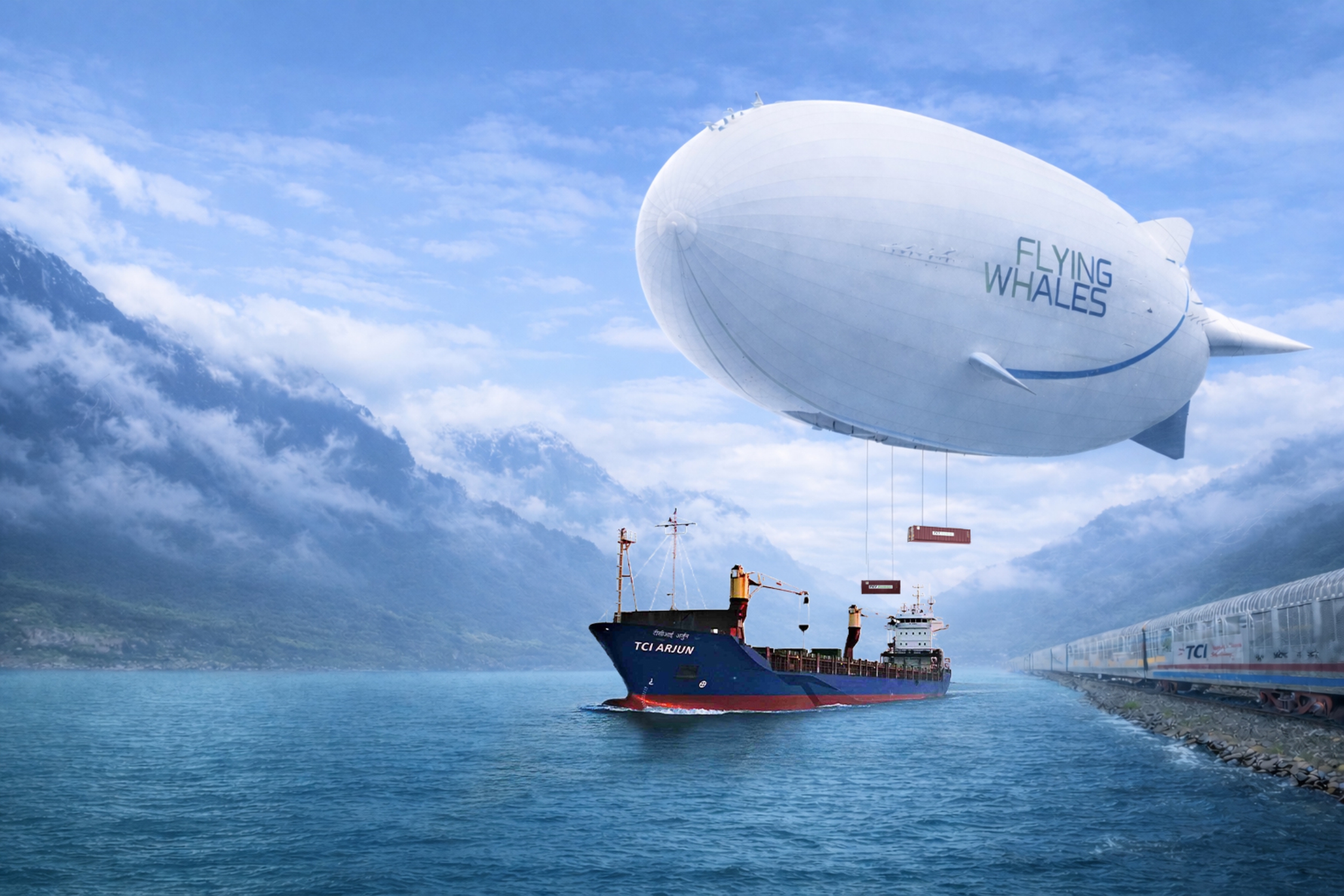
And for cargo that no electric truck can reach heavy, over-dimensional loads in terrain with no roads, our collaboration with Flying Whales Services and their LCA60T airship (60-tonne capacity, hover load and unload, zero ground infrastructure required) is building the answer. Low-carbon does not have to mean low-capability.
THE BOTTOM LINE
The 2026 fuel shock is painful. It is also clarifying. Fleet operators who deferred EV decisions are running the numbers again and the numbers are different. Manufacturers are committing to EV platforms. Policy support has been extended. The economics are shifting, fast.
The question is no longer whether to electrify. It is which routes, which timeline and which financing structure. At TCI, we know our answers. What are yours?