



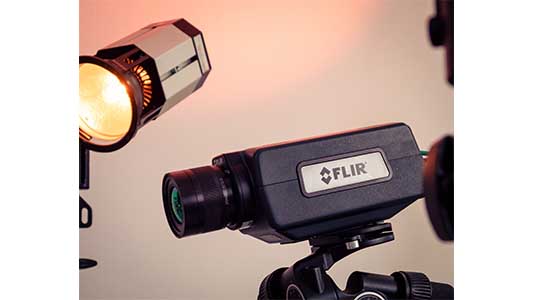
Flir, a Teledyne company, is highlighting a new advancement in automated non‑destructive testing (NDT) through a technical collaboration with edevis GmbH, a leader in active thermography. Together, the companies demonstrate how the Flir A6450 long‑life cooled MWIR camera integrates seamlessly into automated inspection workflows to detect structural anomalies in real time, enabling manufacturers to identify defects that traditional point‑based methods or standard sensors often miss.
Across industries such as automotive, energy, and advanced manufacturing, hidden flaws like grinding burn, coating delamination, adhesion failures, and subsurface irregularities can compromise product integrity. Conventional inspection techniques typically examine only small areas, leaving critical defects undetected.
The Flir–edevis approach introduces a new standard for full‑surface, high‑speed thermal inspection that delivers actionable results within seconds.

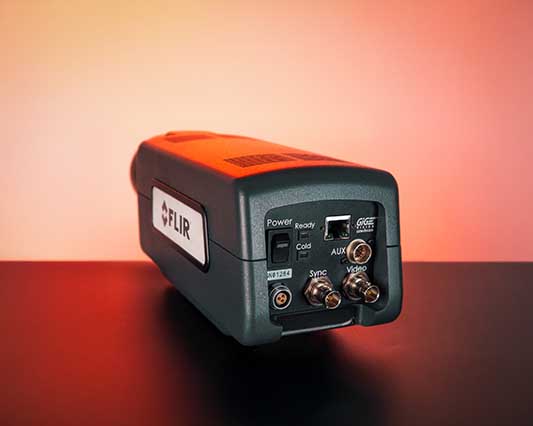
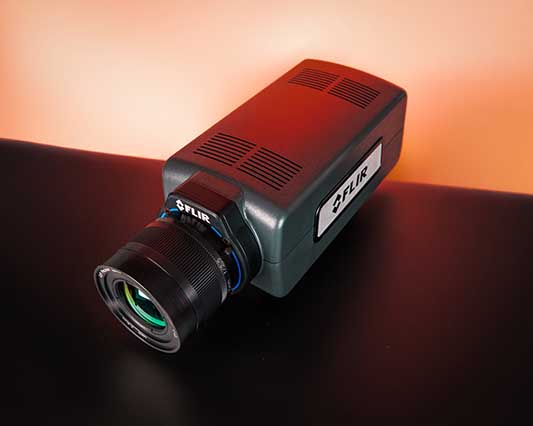
At the core of the system is the Flir A6450, engineered for continuous 24/7 operation in demanding industrial environments. Its long‑life cooler, rated for 27,000 hours, and its high‑speed MWIR imaging capabilities allow precise temperature measurement and rapid thermal response capture—key requirements for identifying subsurface defects during active thermography. When paired with edevis’ laser‑based excitation and advanced thermography software, the system reveals structural anomalies that are invisible to the human eye and difficult to detect with conventional sensors.
“Manufacturers are under increasing pressure to automate more of their quality assurance processes while maintaining absolute reliability,” said Mathew Hasty, Global Vertical Director at Flir. “The A6450 is designed for exactly these environments. Combined with edevis’ active thermography, it delivers real‑time insight into structural behavior that helps customers catch defects earlier and keep production moving.”
edevis’ active thermography platforms are widely used for structural inspection of metals, composites, battery components, and precision‑machined parts. By integrating Flir thermal imaging, these systems provide deeper insight into material behavior under thermal excitation and support automated decision‑making directly on the production line. The result is a reliable,