

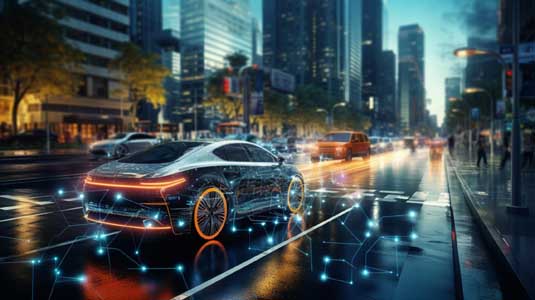
A few years ago, a car’s value was measured by its engine, fuel efficiency, and design. Today, the automotive industry is experiencing a huge Change where software, sensors, connectivity, and advanced electronics are becoming just as important as horsepower.
Cars are no longer standalone machines; they are evolving into intelligent, connected platforms capable of communicating with drivers, other vehicles, infrastructure, and cloud-based services in real time.
The connected car Industry has emerged as one of the fastest-growing sectors in the global automotive industry. According to industry estimates, the global connected car market is expected to surpass $250 billion by the end of the decade, driven by advancements in 5G connectivity, artificial intelligence (AI), vehicle-to-everything (V2X) communication, and the rapid adoption of electric vehicles (EVs). In India, the trend is gaining momentum as consumers increasingly demand enhanced safety, convenience, infotainment, and predictive maintenance features.
For manufacturers, electronics are no longer an add-on feature; they are becoming the backbone of vehicle invention. From smart navigation systems and over-the-air (OTA) software updates to autonomous driving capabilities and advanced driver assistance systems (ADAS), electronics are redefining how vehicles operate and how drivers interact with them.
The Rise of Connected Mobility
Connected vehicles leverage embedded sensors, telematics systems, wireless communication technologies, and cloud computing to exchange data continuously. This connectivity enables vehicles to provide real-time information about traffic, road conditions, vehicle health, fuel consumption, battery status, and driving behavior.
Modern vehicles can now integrate seamlessly with smartphones, smarthomes, and digital ecosystems. Drivers can remotely lock or unlock doors, start engines, locate parked vehicles, monitor battery levels, and receive maintenance alerts through mobile applications.
The increasing availability of 4G and 5G networks has further accelerated connected mobility by enabling faster data transfer, lower latency, and enhanced communication between vehicles and infrastructure.
Electronics at the Core of Smart Vehicles
The intelligence behind connected cars is powered by a complex network of electronic components and systems. These include:
Advanced Sensors
Connected vehicles utilize a variety of sensors, including radar, LiDAR, ultrasonic sensors, cameras, and inertial measurement units. These sensors continuously collect data about the vehicle’s surroundings, helping improve safety and driving performance.
Telematics Control Units (TCUs)
The telematics control unit acts as the vehicle’s communication hub. It enables data transmission between the vehicle and external networks, facilitating navigation, diagnostics, emergency services, and remote vehicle management.
Electronic Control Units (ECUs)
Modern vehicles may contain more than 100 ECUs managing various functions such as engine performance, braking systems, climate control, infotainment, and battery management.
Artificial Intelligence and Edge Computing
AI algorithms analyze vast amounts of data generated by connected vehicles. Edge computing allows data processing within the vehicle itself, reducing response times and enabling critical safety functions without relying entirely on cloud connectivity.

Enhancing Safety Through Connectivity
Safety remains one of the strongest drivers behind connected vehicle adoption. Advanced Driver Assistance Systems (ADAS) rely heavily on electronics and connectivity to help prevent accidents and improve road safety.
Features such as adaptive cruise control, lane departure warnings, blind spot monitoring, automatic emergency braking, and driver fatigue detection are becoming increasingly common across vehicle segments.
Vehicle-to-Vehicle (V2V) communication enables cars to exchange information about speed, location, and direction. This can help prevent collisions by alerting drivers about potential hazards beyond their line of sight.
Similarly, Vehicle-to-Infrastructure (V2I) communication allows vehicles to interact with traffic signals, road signs, toll booths, and smart city infrastructure, creating a more efficient transportation ecosystem.
The Connected Electric Vehicle Revolution
The rise of electric vehicles is further accelerating connected car technologies. EVs rely extensively on software and electronics for battery management, energy optimization, charging infrastructure integration, and performance monitoring.
Connected EV platforms enable manufacturers to deliver software updates remotely, improving vehicle functionality without requiring physical service visits. Drivers can access real-time battery health data, locate charging stations, optimize charging schedules, and receive predictive maintenance notifications.
As governments worldwide promote electric mobility, the convergence of electrification and connectivity is creating new opportunities for automotive innovation.
Data: The New Fuel
Connected cars generate enormous volumes of data every day. Industry experts estimate that a single connected vehicle can produce several terabytes of data annually through sensors, cameras, GPS systems, and onboard diagnostics.
This data provides valuable insights for manufacturers, fleet operators, insurance companies, and mobility service providers. Predictive maintenance can identify component failures before they occur, reducing downtime and repair costs. Usage-based insurance models can assess driving behavior and offer personalized premiums.
Fleet operators can optimize routes, improve fuel efficiency, monitor driver performance, and enhance overall operational productivity using connected vehicle data.
Cybersecurity Challenges
While connectivity brings significant benefits, it also introduces new cybersecurity risks. As vehicles become increasingly software-defined, protecting them against cyber threats becomes critical.
Automotive manufacturers are investing heavily in encryption technologies, secure communication protocols, intrusion detection systems, and cybersecurity frameworks to safeguard vehicle networks and customer data.
Regulatory authorities worldwide are introducing stringent cybersecurity standards to ensure connected vehicles remain secure throughout their lifecycle.
The future success of connected mobility will depend not only on technological innovation but also on maintaining consumer trust through robust security measures.
India’s Growing Connected Vehicle Opportunity
India is emerging as a promising market for connected vehicle technologies. Rising smartphone penetration, expanding digital infrastructure, increasing disposable incomes, and growing demand for premium mobility experiences are driving adoption.
Automakers operating in India are increasingly introducing connected features even in mid-range vehicles. Services such as remote diagnostics, vehicle tracking, emergency assistance, geofencing, and connected infotainment are becoming standard offerings.
Government initiatives promoting smart cities, intelligent transportation systems, and electric mobility are expected to further support the growth of connected vehicle ecosystems across the country.
Additionally, India’s growing semiconductor and electronics manufacturing ecosystem presents opportunities for local production of automotive electronic components, reducing dependence on imports and strengthening supply chains.
The Road Ahead
The future of connected cars extends far beyond infotainment and navigation. Emerging technologies such as autonomous driving, 5G-enabled mobility, digital twins, cloud-based vehicle management, and software-defined vehicles will continue to reshape the automotive landscape.
Automakers are increasingly transforming into technology companies, investing in software development, AI capabilities, semiconductor partnerships, and digital platforms. As vehicles become smarter, safer, and more connected, the role of electronics will only grow in importance.
Conclusion
Connected cars represent one of the most significant technological shifts in automotive history. Powered by advanced electronics, sensors, AI, and high-speed connectivity, modern vehicles are evolving into intelligent mobility platforms capable of delivering safer, more efficient, and highly personalized driving experiences.
As the worlds of automotive engineering, electronics, and digital technology continue to converge, connected vehicles will play a central role in shaping the future of transportation. For manufacturers, technology providers, and consumers alike, the journey toward smarter mobility has only just begun. The vehicles of tomorrow will not simply transport people—they will communicate, learn, adapt, and actively contribute to a safer and more connected world.