

Embedded systems expert, Direct Insight explains how to navigate AI RAM shortages and price instability
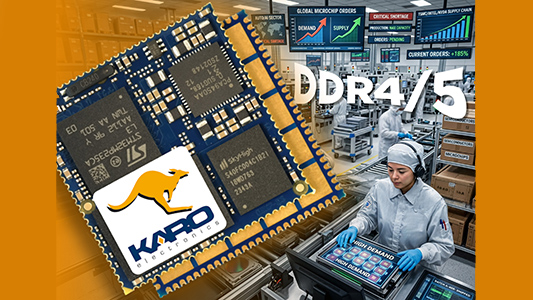
Direct Insight, the UK-based technical systems integrator & value-added reseller of system-on-modules (SoMs) & other embedded systems, has noted that the ongoing pressure on memory supply, driven by exponential demand from AI infrastructure, is adversely impacting developers of embedded systems – and is offering insight and expertise to help designers and buyers navigate this challenge. The compound effect of AI-fuelled supply pressure and geopolitical uncertainties has seen both lead times and prices rise steeply, particularly for higher-performance, higher-bandwidth DDR5 RAM, resulting in specification, design and procurement hurdles for embedded development teams.


“The rapid boom of AI technology has sent shockwaves through the semiconductor memory market,” notes David Pashley, co-founder & Managing Director at Direct Insight. “Skyrocketing demand has ramped up pressure on high performance DDR5, and that trickles down to DDR4 and so on, with prices and lead times spiralling as inventory is bought up. Then, crucially, production is shifted from commodity DRAM capacity to higher-margin HBM (High Bandwidth Memory), which is primarily used in high-performance computing (HPC) and AI hardware to help overcome the ‘memory wall’ bottleneck. This just makes things worse for the embedded/IoT world.”
Direct Insight has always focused on helping development teams to select and specify the optimal system-on-module hardware – allied to the right software and OS tools – for their embedded design projects, along with support and services, allowing customers to focus on applying their domain knowledge to deliver excellent differentiated products. Direct Insight’s deep embedded development expertise and long-standing close relationships with key embedded hardware and software partners mean it is well-placed to make the best recommendation for any given project or set of requirements, as well having the agility and know-how to help smoothly implement it.
“Over the last couple of decades, the trend with embedded hardware has been to just add more and more memory capacity and capability. Traditionally considered a cheap commodity, it’s been almost a no-brainer to just double it, then double it again – in case you need it in the future,” observes Pashley. “But the current memory squeeze, driven by unprecedented demand from the AI goldrush, is ushering in a whole new age of RAM consciousness. In this new world, the RAM is now the most expensive part of your BOM – even more expensive than the processor!”
Working with an embedded systems expert like Direct Insight can help development teams navigate such obstacles and, at the simplest level, guide their hardware and software choices to help define a less RAM-hungry strategy. “The ability to use 512 megabytes instead of a gigabyte, or DDR3 rather than DDR4 or 5, in an embedded system might help get your product to market faster – or be the thing that differentiates your product pricing from your competitors,” concludes Pashley.
Visit directinsight.co.uk to learn how Direct Insight can help you navigate hardware choices, OS complexity and cybersecurity compliance to accelerate and de-risk development on your embedded systems design projects.“But the current memory squeeze, driven by unprecedented demand from the AI goldrush, is ushering in a whole new age of RAM consciousness. In this new world, the RAM is now the most expensive part of your BOM – even more expensive than the processor!”

Working with an embedded systems expert like Direct Insight can help development teams navigate such obstacles and, at the simplest level, guide their hardware and software choices to help define a less RAM-hungry strategy. “The ability to use 512 megabytes instead of a gigabyte, or DDR3 rather than DDR4 or 5, in an embedded system might help get your product to market faster – or be the thing that differentiates your product pricing from your competitors,” concludes Pashley.
Visit directinsight.co.uk to learn how Direct Insight can help you navigate hardware choices, OS complexity and cybersecurity compliance to accelerate and de-risk development on your embedded systems design projects.