
Electronics Era

  • About Us
  • Advertise with Us
  • Contact Us
  • e-Mag
  • Webinars
Header logo on website
Advertisement
Advertisement
Menu
  • Home
  • News
    • Industry News
    • Product News
  • TECH ROOM
    • Sensor
    • VR / AR
    • Embedded
    • Medical Electronics
    • Industry 4.0
    • Robotic
    • Automation
    • Smart Machine
    • Component
    • MCU
    • Manufacturing
    • Security
    • Policy
    • Telecom
      • 5G/6G
  • Semiconductor
    • AUTOMOTIVE ELECTRONICS
      • EVs
      • HEVs
      • ADAS
      • Connected Cars
    • IoT-Internet of Things
      • Development Kit
      • IoT Design
    • Power Electronics
      • AC-DC/DC-DC Converters
      • Mosfets
      • IGBTs
      • LEDs
  • A & D
  • T & M
    • 5G testing
    • Oscilloscopes
    • SDN & NFV
    • RF & Wireless
  • AI/ML
  • RENEWABLES
    • Sustainability
    • Solar Magazine
  • Future Tech
    • Data Center
    • Cloud Computing
    • Big Data Analytics
  • Webinars
  • Editor’s Pick
    • Tech Article
    • Tech Blog
    • White Papers
    • EE-Tech Talk
    • Market Research
    • Videos
  • EE Awards
    • EE Awards 2025
    • EE Awards 2024
  • MORE
    • E-Mag
    • Events
    • MAGAZINE Subscription
    • Contact Us
Home AI/ML

Physical AI and Synthetic Data: Taking AI from Simulation to the Real World

By- Devanshu Bajpai, Nuvonix

Vishaka Vardhan by Vishaka Vardhan
November 19, 2026
in AI/ML, Tech Article
Reading Time: 3 mins read
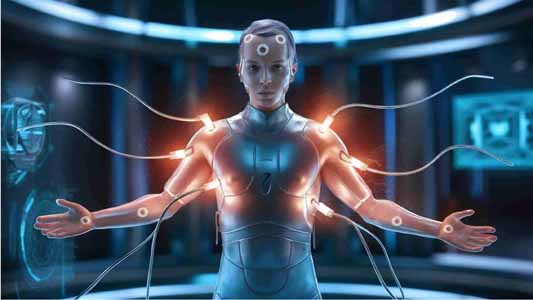
Physical AI
Share on FacebookShare on TwitterShare on LinkedIn

AI has made significant progress over the last few years, but getting it to work reliably in the physical world is a different challenge altogether. A language model can be trained on vast amounts of digital information. A robot operating on a factory floor, an autonomous machine navigating an unfamiliar environment, or an intelligent system working alongside humans has to deal with something far less predictable: reality.

This is where Physical AI is beginning to make a difference. By combining AI with robotics, sensors, simulation, and real-time computing, businesses can build systems that do more than process information. They can understand their surroundings, respond to changing conditions, and take action.

One of the biggest challenges, however, is training these systems. Real-world data is expensive to collect, and there is no practical way to recreate every possible situation a machine might encounter. In some cases, deliberately testing a system under unusual or dangerous conditions simply isn’t an option.

Synthetic data offers a way forward. Instead of relying entirely on information collected from the physical world, developers can create simulated environments to expose AI models to a much wider range of situations. This could include unexpected obstacles, changing lighting conditions, equipment failures, or scenarios that occur too rarely to provide sufficient training data in the real world.

But generating more data does not automatically produce better AI. The quality of that data matters. If a simulation fails to reflect real-world conditions, a model trained in that environment may struggle when deployed outside it. Synthetic data must therefore complement real-world data, not replace it entirely. Testing and refining models against actual operating conditions remains essential.

There is also a significant computing challenge behind this process. Realistic simulations, large-scale data generation, and repeated model training require substantial processing power. As Physical AI applications become more complex, access to suitable AI computing infrastructure will increasingly influence how quickly companies can develop, test, and deploy their solutions.

This extends beyond raw processing power alone. High-performance networking, intelligent data management, advanced storage architectures, and accelerated computing platforms all play a critical role in supporting AI workloads at scale. As demand for AI infrastructure grows, organisations are increasingly turning to specialist technology partners to provide the computing, networking and data infrastructure needed to support Physical AI. Nuvonix is one example of a company helping businesses build this foundation, enabling organisations to move more efficiently from AI experimentation to real-world deployment.

For businesses, the question is no longer simply whether AI can be used in physical operations. It is whether these systems can perform consistently enough to justify deployment at scale. That requires collaboration between AI developers, hardware providers, software companies, and the organisations that understand the environments in which these systems will operate.

India has an opportunity to participate in this shift across manufacturing, automotive, logistics, defence, and industrial automation. However, moving beyond pilot projects will require more than promising demonstrations. Companies will need reliable infrastructure, relevant training data, and a clear understanding of where Physical AI can deliver measurable operational value.

Synthetic data can help shorten the path from development to deployment, but it is not a shortcut around the engineering challenges involved. The real progress will come from combining simulation with real-world experience and giving AI systems the computing resources they need to learn, adapt, and perform reliably.

Ultimately, the success of Physical AI will not be measured by how well a model performs in a simulated environment. It will be measured by what that model can actually do when it encounters the real world.


Tags: AIPhysical AI.Roboticssensors
Vishaka Vardhan

Vishaka Vardhan

Join Our Newsletter

* indicates required
Electronics Era

Electronics Era, India's no.1 growing B2B news forum on Electronics and Cutting Edge Technology is exploring the editorial opportunity for organizations working in the Electronics Manufacturing Services(EMS) Industry.

Follow Us

Browse by Category

  • 5G testing
  • 5G/6G
  • AC-DC/DC-DC Converters
  • ADAS
  • AEIS
  • Aerospace & Defence Electronics
  • AI/ML
  • Automation
  • AUTOMOTIVE ELECTRONICS
  • Big Data Analytics
  • Blockchain
  • Cloud Computing
  • Component
  • Connected Cars
  • Data Center
  • Editor's Desk
  • EE-Tech Talk
  • Electronics Components
  • Embedded
  • EVs
  • Future Tech
  • HEVs
  • Industry 4.0
  • Industry News
  • IoT Design
  • IoT-Internet of Things
  • LED & Lighting
  • LEDs
  • Manufacturing
  • Market Research
  • MCU
  • Medical Electronics
  • Mosfets
  • News
  • Oscilloscopes
  • Policy
  • Power Electronics
  • Product News
  • RENEWABLES
  • RF & Wireless
  • Robotic
  • SDN & NFV
  • Security
  • Semiconductor
  • Sensor
  • Smart Machine
  • SMT/PCB/EMS
  • Sustainability
  • T & M
  • Tech Article
  • Tech Blog
  • TECH ROOM
  • Telecom
  • Uncategorized
  • VR / AR
  • White Papers

Recent News

Software

Update Zephyr 4.5.0: Expanding Interface Support, Now Compatible with 26 new Development boards

November 19, 2026
Physical AI

Physical AI and Synthetic Data: Taking AI from Simulation to the Real World

November 19, 2026
  • About Us
  • Advertise with Us
  • Contact Us

© 2022-23 TechZone Print Media | All Rights Reserved

No Result
View All Result
  • Home
  • News
    • Industry News
    • Product News
  • TECH ROOM
    • Sensor
    • VR / AR
    • Embedded
    • Medical Electronics
    • Industry 4.0
    • Robotic
    • Automation
    • Smart Machine
    • Component
    • MCU
    • Manufacturing
    • Security
    • Policy
    • Telecom
      • 5G/6G
  • Semiconductor
    • AUTOMOTIVE ELECTRONICS
      • EVs
      • HEVs
      • ADAS
      • Connected Cars
    • IoT-Internet of Things
      • Development Kit
      • IoT Design
    • Power Electronics
      • AC-DC/DC-DC Converters
      • Mosfets
      • IGBTs
      • LEDs
  • A & D
  • T & M
    • 5G testing
    • Oscilloscopes
    • SDN & NFV
    • RF & Wireless
  • AI/ML
  • RENEWABLES
    • Sustainability
    • Solar Magazine
  • Future Tech
    • Data Center
    • Cloud Computing
    • Big Data Analytics
  • Webinars
  • Editor’s Pick
    • Tech Article
    • Tech Blog
    • White Papers
    • EE-Tech Talk
    • Market Research
    • Videos
  • EE Awards
    • EE Awards 2025
    • EE Awards 2024
  • MORE
    • E-Mag
    • Events
    • MAGAZINE Subscription
    • Contact Us

© 2022-23 TechZone Print Media | All Rights Reserved

Advertisement
Advertisement