



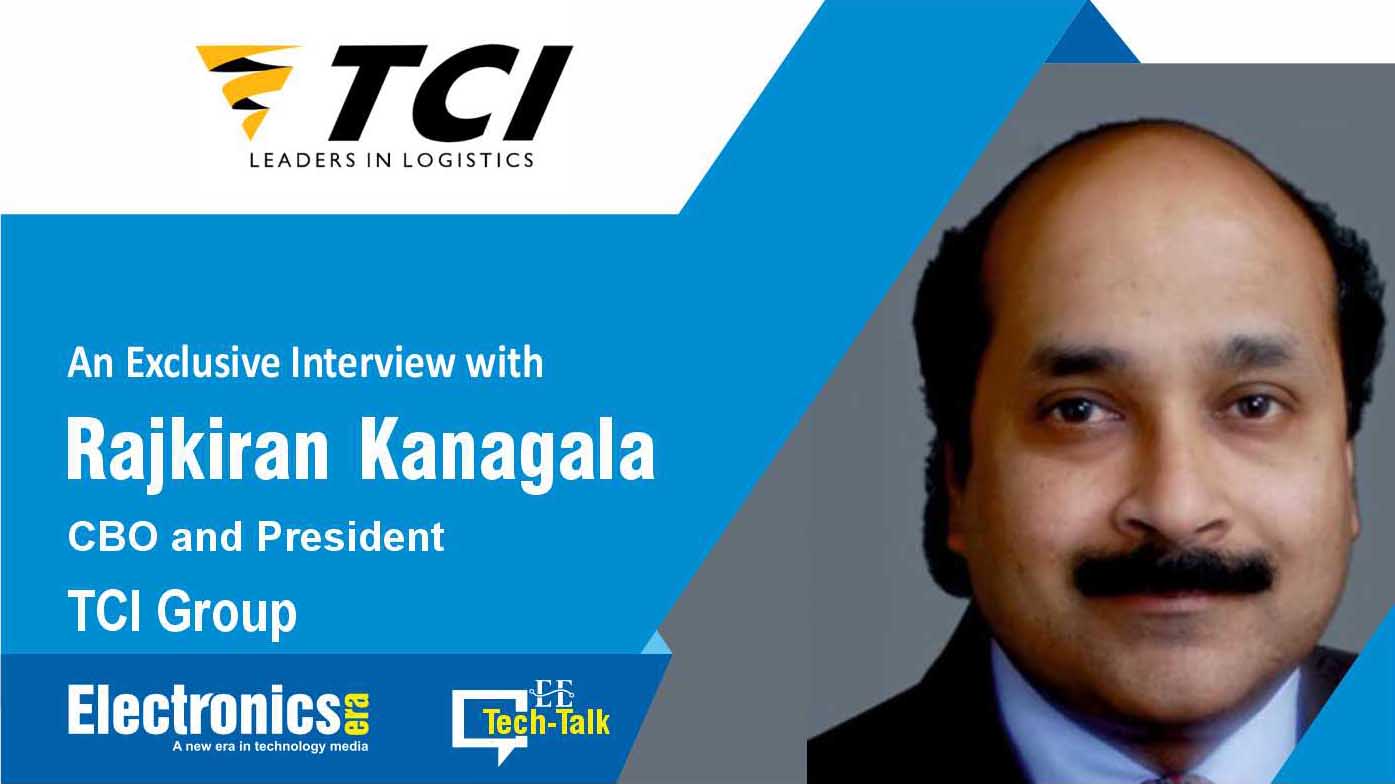
Q1. India’s logistics sector is undergoing a major transformation. What do you see as the biggest opportunities for logistics companies as India moves towards becoming a $5 trillion+ economy?
The biggest opportunity is scale meeting formalization. As manufacturing, exports and consumption all grow, freight is shifting from unorganized single-truck operators to organized players who can offer network reliability, technology visibility and compliance — alongside rising demand for contract logistics and specialized cold-chain services. Much of this traces back to the National Logistics Policy, which focused on cutting logistics cost as a share of GDP to make Indian exports more competitive. Global investors and logistics players are actively building assets here, and projects like the Dedicated Freight Corridor which took time to complete, are now enabling double-stack container movement and materially improving hinterland connectivity. The companies that win will be the ones offering end-to-end network design, not just point-to-point transportation.
Q2. How is technology — AI, automation, IoT, predictive analytics — changing the way logistics and supply chains are designed and managed?
Technology has moved logistics from tracking what already happened to predicting what’s about to happen. IoT and GPS give real-time visibility into location and temperature; predictive analytics helps forecast demand and pre-position inventory; AI drives route optimization, load matching and control-tower dashboards spanning road, rail, air and sea. A good example is order processing: RPA bots now read incoming shipment orders and pass them API-to-API, like ULIP, LDB, Fast Tag, etc. into the provider’s ERP, cutting out most manual coordination. Digital twins let us simulate network flows before committing physical capacity. But technology is an enabler, not a strategy, the fundamentals of trucks, warehouses and people don’t go away; technology just gives organized players a real edge on top of them.
Q3. With the rapid growth of e-commerce, D2C brands and quick commerce, what are the biggest changes you are seeing in customer expectations around logistics and delivery?
Expectations have compressed on time and expanded on transparency. Same-day and even 10–20 minute delivery windows are becoming baseline in some categories, pushing a shift from centralized warehousing to hub-and-spoke, dark-store models. Real-time tracking often via WhatsApp Business updates is now a baseline expectation, not a value-add, and flexible returns are critical for D2C and fashion. Customers are also becoming part of the planning process, working with us directly on demand forecasting, especially around India’s festival season Onam, Janmashtami, Dussehra, Diwali and wedding-season peaks, which requires both physical capacity planning and close digital coordination in advance.
Q4. India’s logistics costs have historically been higher than those of many developed economies. What are the key structural changes needed to make Indian logistics more competitive globally?
The gap comes down to a few structural issues: road carries a disproportionate share of freight versus cheaper rail and coastal shipping; a large share of trucking capacity remains unorganized, leading to high empty-running rates; and warehousing has historically been fragmented across states to optimize for tax rather than logistics efficiency, though GST has enabled consolidation. Closing the gap needs continued investment in dedicated freight corridors, port connectivity, digitized documentation, and fleet consolidation. Progress is real: India’s logistics cost as a share of GDP has moved from roughly 13–14% a decade ago to around 8% in recent estimates (Economic Survey 2025–26 / DPIIT–NCAER), but the direction is clearly positive.
Q5. How can Indian logistics companies build truly integrated multimodal supply chains across road, rail, air and sea, and what role will government infrastructure initiatives play in this transformation?
Integration means designing networks where modes hand off seamlessly under a single point of accountability which takes physical infrastructure, a control tower that can re-route across modes on cost and reliability trade-offs, and commercial partnerships for legs a provider doesn’t own. Government initiatives are foundational: PM Gati Shakti integrates data across roughly 44 ministries into one digital planning layer; Bharatmala and Sagarmala are improving road and port connectivity. On the data side, the Unified Logistics Interface Platform (ULIP) offers free APIs pulling together vehicle, driver, PAN/GSTIN and container-tracking data millions of transactions already run through it. Private players’ role is building the last-mile and intelligence layer on top of that public infrastructure.

Q6. Sustainability is becoming increasingly important for global supply chains. What practical steps can logistics companies take to reduce emissions while maintaining cost and delivery efficiency?
Sustainability and cost efficiency are unusually well aligned in logistics. Practical levers include shifting long-haul freight from road to rail and coastal shipping; reducing empty running through better load-matching technology; adopting fuel-efficient and alternative-fuel fleets as charging infrastructure matures; running warehouses on renewable power; and route optimization that cuts total distance traveled. Most of these efficiency gains reduce cost and emissions together, which is why sustainability is increasingly built into network design rather than treated as a separate initiative.
Q7. As India becomes a global manufacturing and export hub, how well prepared is our logistics ecosystem to support global companies setting up supply chains in India?
The ecosystem has improved substantially: GST unified the domestic market, port turnaround times have improved, and organized players now offer the integrated service global manufacturers expect. Gaps remain in last-mile rail/port connectivity, Grade-A warehousing outside major metros, and freight-corridor completion pace. The numbers back the direction of travel: container dwell time has fallen from roughly 5–6 days to 3–3.5 days, and ship turnaround time is down about 50% still behind Singapore or Jebel Ali’s 1–1.5 days, but closing. Merchandise exports growing despite geopolitical headwinds is itself a sign the network is holding up under pressure.
Q8. What role will startups and new-age logistics technology companies play in transforming India’s traditional logistics ecosystem, and where do you see the biggest scope for collaboration with established players?
Startups solve narrow, high-friction problems freight matching, fleet visibility, warehouse automation, hyperlocal delivery faster than large incumbents can alone. The relationship works best as complementary rather than competitive: established players bring scale, assets and enterprise trust; startups bring speed of innovation. We’re seeing this through partnerships, licensing and acquisitions. The biggest scope going forward is AI-driven network planning, EV and green logistics tech, warehouse automation, and simulation/digital-twin platforms that let us stress-test network decisions before committing physical capacity.
Q9. Talent and leadership are critical to scaling logistics businesses. What are the skills that the next generation of logistics and supply-chain professionals will need to succeed?
The profession is shifting from operational execution to analytical decision-making: data literacy, comfort with WMS/TMS and AI-driven planning tools, and cross-functional thinking across procurement, manufacturing, sales and finance. Fundamentals still matter too such as network design, regulatory knowledge and negotiation skills. Honestly, the harder challenge may be attraction rather than skill-building: logistics competes for Gen Z and Gen Alpha talent against more visibly “glamorous” sectors. What we remind young talent is that the impact is enormous even without a product with your name on it during COVID this industry moved roughly 100,000 tonnes of medical oxygen nationally, largely down to truck drivers and dispatch planners getting it there.
Q10. Looking ahead to 2030, what will the Indian logistics industry look like — and what are the three biggest bets that business should be making today to stay ahead of the curve?
By 2030, expect Indian logistics to be more organized, digital and multimodal — dedicated freight corridors substantially operational, more freight on rail and coastal shipping, and logistics costs as a share of GDP converging toward global benchmarks. Same-day delivery will likely extend well beyond metros, and sustainability reporting will be standard in partner selection. Zooming out, India’s Viksit Bharat ambition a developed, roughly $15 trillion economy by 2047 makes logistics a prerequisite, not a side story.
Three biggest bets businesses should be making today:
- Technology and data infrastructure — control-tower visibility, predictive analytics and AI-driven planning, since the gap between tech-enabled and traditional operators will only widen.
- Multimodal and green capacity — building rail, coastal shipping and alternative-fuel capacity ahead of demand, since infrastructure and fleet transitions take years.
- Talent and organizational capability — teams that combine logistics operating knowledge with analytical fluency, since the winners will be defined as much by data as by fleet size.