



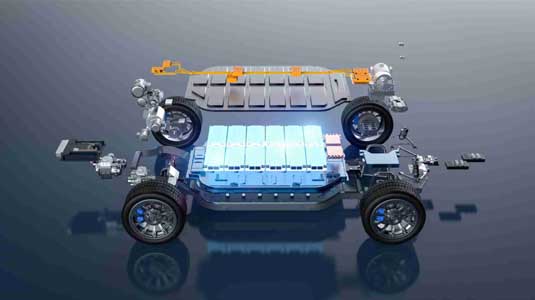
The global shift toward electric mobility is no longer a distant vision—it is unfolding rapidly across markets, driven by climate goals, policy push, and technological innovation. At the center of this transformation lies a critical yet often underappreciated domain: thermal management systems in electric vehicles (EVs). While batteries, motors, and power electronics receive most of the spotlight, it is thermal management that ensures these components perform efficiently, safely, and reliably over time.
In simple terms, an EV’s performance, range, lifespan, and safety are deeply influenced by how well heat is managed. Unlike internal combustion engine (ICE) vehicles, where waste heat is abundant and often easier to handle, EVs require precise and intelligent thermal regulation across multiple systems operating under varying conditions.
The Need for Thermal Management in EVs
Electric vehicles operate through a complex interplay of high-energy components—battery packs, electric motors, inverters, onboard chargers, and power electronics. Each of these generates heat during operation, and excessive heat can lead to:
- Reduced battery efficiency and lifespan
- Degradation of electronic components
- Safety risks, including thermal runaway
- Loss of vehicle performance and range
At the same time, these systems must also function optimally in cold conditions, where low temperatures can negatively impact battery chemistry and efficiency. This dual challenge—cooling during high loads and heating during cold conditions—makes EV thermal management significantly more complex than in traditional vehicles.
Key Components Requiring Thermal Control
1. Battery Pack
The battery is the most temperature-sensitive and expensive component in an EV. Lithium-ion batteries operate optimally within a narrow temperature range (typically 20°C to 40°C). Deviations can cause:
- Capacity loss
- Faster degradation
- Increased internal resistance
- Risk of thermal runaway
Thermal management systems ensure uniform temperature distribution across all cells, preventing hotspots and ensuring consistent performance.
2. Electric Motor
While electric motors are more efficient than ICE engines, they still generate heat under load. Overheating can reduce efficiency and damage insulation materials, leading to performance loss or failure.
3. Power Electronics (Inverter, Converter)
These components manage the flow of electrical energy within the vehicle. High switching frequencies and power densities generate significant heat, requiring efficient cooling mechanisms to maintain reliability.
4. Cabin Climate Control
Unlike ICE vehicles, EVs cannot rely on engine waste heat to warm the cabin. This necessitates dedicated heating systems, which can significantly impact battery consumption if not optimized.
Types of Thermal Management Systems
1. Air Cooling Systems
Air cooling is the simplest and most cost-effective method. It uses ambient air or forced airflow to dissipate heat.
Advantages:
- Low cost
- Simple design
- Lightweight
Limitations:
- Limited cooling efficiency
- Uneven temperature distribution
- Not suitable for high-performance EVs
2. Liquid Cooling Systems
Liquid cooling is the most widely adopted solution in modern EVs. It uses coolant fluids circulated through channels around battery cells and electronic components.
Advantages:
- High heat transfer efficiency
- Better temperature uniformity
- Suitable for high-performance applications
Limitations:
- Higher cost and complexity
- Requires pumps, heat exchangers, and control systems
3. Refrigerant-Based Cooling
Some advanced systems integrate the vehicle’s air conditioning system to cool the battery directly using refrigerants.
Advantages:
- Highly efficient cooling
- Compact integration
Limitations:
- Complex system design
- Higher maintenance requirements
4. Phase Change Materials (PCMs)
PCMs absorb heat during phase transition (solid to liquid), helping regulate temperature spikes.
Advantages:
- Passive cooling
- No moving parts
Limitations:
- Limited heat dissipation capacity
- Often used in combination with other systems
Heating Systems in EVs
Heating is equally critical, especially in colder climates. EVs use:
- PTC (Positive Temperature Coefficient) heaters – simple but energy-intensive
- Heat pumps – energy-efficient and increasingly common
Heat pumps can significantly reduce energy consumption compared to traditional heating methods, improving overall vehicle range.
Integrated Thermal Management Systems
Modern EVs are moving toward integrated thermal architectures, where a single system manages:
- Battery temperature
- Power electronics cooling
- Cabin climate control
This integration allows for:
- Improved energy efficiency
- Reduced system complexity
- Optimized thermal load distribution
For example, waste heat from power electronics can be redirected to warm the battery or cabin, improving overall efficiency.
Challenges in EV Thermal Management
1. Energy Efficiency vs Performance
Cooling and heating systems consume energy from the battery, directly impacting vehicle range. Designing systems that balance thermal performance with minimal energy consumption is a key challenge.
2. Fast Charging Demands

Rapid charging generates significant heat within the battery. Efficient thermal management is essential to:
- Prevent overheating
- Maintain charging speed
- Ensure safety
3. Space and Weight Constraints
Thermal systems must be compact and lightweight while still delivering high performance—especially in passenger vehicles where space is limited.
4. Safety and Reliability
Thermal runaway remains a critical concern in lithium-ion batteries. Advanced thermal management must include:
- Early detection systems
- Fail-safe mechanisms
- Robust cooling strategies
Emerging Technologies and Innovations
1. Advanced Coolants
New dielectric fluids allow direct immersion cooling of battery cells, offering superior heat dissipation and improved safety.
2. Smart Thermal Management
AI and data-driven systems are being used to dynamically control temperature based on:
- Driving conditions
- Battery state of charge
- Ambient temperature
This predictive approach improves efficiency and extends component life.
3. Solid-State Batteries
Future battery technologies like solid-state batteries promise improved thermal stability, potentially reducing cooling requirements.
4. Integrated Heat Pump Systems
Next-generation heat pumps are becoming more efficient and capable of operating across wider temperature ranges, making them a standard feature in premium EVs.
Role of Thermal Management in EV Range and Performance
Thermal management directly impacts:
- Driving range – inefficient systems drain battery power
- Charging time – overheating slows down fast charging
- Battery life – poor thermal control accelerates degradation
- Safety – overheating increases risk of failure
In many cases, optimizing thermal systems can deliver range improvements comparable to increasing battery capacity—making it a highly cost-effective area of innovation.
India’s EV Landscape and Thermal Challenges
In markets like India, thermal management takes on additional complexity due to:
- High ambient temperatures
- Dust and humidity
- Stop-and-go traffic conditions
These factors demand robust, adaptive, and cost-efficient thermal solutions tailored to local conditions. As EV adoption accelerates, there is a growing opportunity for:
- Indigenous thermal system innovation
- Localization of components
- Collaboration between OEMs and technology providers
Future Outlook
As EV adoption continues to scale globally, thermal management will evolve from a supporting system to a core differentiator in vehicle design. The future will likely see:
- Fully integrated thermal platforms
- Greater use of AI-driven control systems
- Adoption of advanced materials and cooling techniques
- Increased focus on sustainability and energy efficiency
Automakers and suppliers that invest in next-generation thermal technologies will gain a competitive edge—not just in performance, but also in cost, safety, and user experience.
Conclusion
Thermal management systems are the silent enablers of electric mobility. They ensure that EVs operate efficiently, safely, and reliably across diverse conditions. As the industry moves toward higher energy densities, faster charging, and more demanding performance standards, the importance of thermal management will only grow.
In the journey toward a fully electrified future, it is not just about building better batteries or more powerful motors—it is about managing the heat that comes with them. And in that sense, thermal management is not just a technical necessity; it is the backbone of sustainable and scalable electric mobility.