


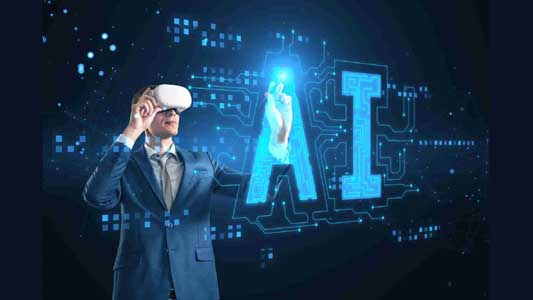
For years, projectors were evaluated primarily on specifications — brightness, resolution, contrast ratio, and lamp life. While these metrics remain important, they no longer define the full picture. The projection industry is undergoing a deeper transformation, driven by rapid advances in artificial intelligence (AI) and connected technologies. Projectors today are evolving from standalone display devices into intelligent, networked visual systems designed for dynamic environments.
Major players of the projector sector, viewed this shift not as a trend but as a fundamental change in how projection technology must function in classrooms, corporate boardrooms, entertainment spaces, and professional AV installations.
AI is Redefining Visual Performance
Artificial intelligence is reshaping how projectors process and present content. Traditionally, image adjustments relied on fixed pre-sets or manual calibration. AI introduces adaptability.
Modern projection systems can analyse content in real time, optimizing brightness, contrast, and colour performance based on what is being displayed. Scene recognition enhances HDR rendering, while intelligent image processing improves clarity across varied content sources. AI-based upscaling can refine lower-resolution inputs, delivering sharper visuals without distortion.
The emphasis has been on integrating intelligent processing that works seamlessly in the background. The goal is not to overwhelm users with settings, but to ensure consistent visual performance across different environments. In education and enterprise spaces, where clarity and readability are critical, this adaptability enhances both engagement and efficiency.
Intelligent Setup and Environmental Awareness
Traditional projector setup required careful alignment, keystone adjustments, and manual focus corrections. Intelligent automation is now reducing that complexity.
Capabilities such as automatic keystone correction, auto-focus, and ambient light sensing allow projection systems to adjust themselves according to room conditions. Screen fit alignment ensures accurate image geometry even in less-than-ideal installations.
For organizations deploying multiple units, this intelligence significantly reduces setup time and technical intervention.
Predictive Maintenance and Remote Management

Beyond visual optimization, AI is enhancing operational reliability. Connected projectors can now monitor usage patterns, track system health, and generate alerts when maintenance may be required. This predictive approach reduces unexpected downtime and improves lifecycle management.
In large enterprise or campus environments, centralized management platforms enable administrators to monitor multiple devices remotely, streamline updates, and maintain consistency across locations.
Projector manufacturers recognize that projection technology must align with modern IT infrastructure expectations. Intelligent diagnostics and remote management capabilities are increasingly essential, particularly in professional environments where operational continuity is critical.
Connectivity as a Core Requirement
While AI enhances internal intelligence, connectivity expands the projector’s role within a broader ecosystem. Wireless presentation, multi-device casting, and BYOD compatibility have become standard expectations in collaborative environments.
In classrooms and meeting rooms, users expect seamless transitions between devices, minimal setup time, and reliable wireless performance. Removing cable clutter not only simplifies infrastructure but also improves flexibility and user experience.
Integration with Modern AV Ecosystems
Projection systems are increasingly integrated into networked AV and IT infrastructures. Features such as remote firmware updates, AV-over-IP compatibility, and cloud-based monitoring allow organizations to manage projection assets more efficiently.
Network connectivity ensures devices remain updated, secure, and scalable. For institutions operating across multiple campuses or office locations, this centralized control is essential.
In current time smart projectors continues to prioritize interoperability and compatibility with evolving control standards, ensuring projection systems integrate smoothly within larger smart-building environments.
Enabling Emerging Applications
Advancements in AI and connectivity are also enabling new use cases that demand precision and responsiveness. Applications such as gaming, simulation training, immersive retail displays, and hybrid conferencing require low latency and high refresh performance.
The convergence of intelligent image processing and stable connectivity ensures projection systems deliver immersive experiences without perceptible delay. Performance consistency is increasingly important as visual systems support more interactive and real-time applications.
The Convergence of Intelligence and Connectivity
The most meaningful transformation occurs where AI and connectivity intersect. Together, they create projection systems that are adaptive, context-aware, and seamlessly integrated into digital workflows.
In education, intelligent brightness optimization combined with wireless content sharing enhances classroom collaboration. In corporate environments, connected projection systems support hybrid meeting models by integrating with conferencing platforms and shared digital workspaces.
Home entertainment spaces benefit from adaptive image tuning that responds to ambient lighting conditions automatically. Across sectors, projection technology is becoming more intuitive and responsive.
In projector sector, major players’ focus on innovation reflects the belief that projection must evolve beyond static display capability to become a dynamic visual communication tool.
Looking Ahead
As AI models advance and connectivity standards mature, projection systems will continue moving toward greater autonomy. Edge-based processing, deeper integration with IoT ecosystems, and increasingly personalized image optimization are likely to define the next stage of evolution.
Future projection environments may adapt not only to physical surroundings but also to usage patterns and scheduled activities. The shift from passive hardware to intelligent visual platform is already underway
Now a days the focus remains on harnessing AI and connectivity to create projection solutions that are secure, adaptive, and future-ready. The transformation of projection technology is no longer about incremental improvement — it represents a redefinition of how visual experiences are delivered across industries.