

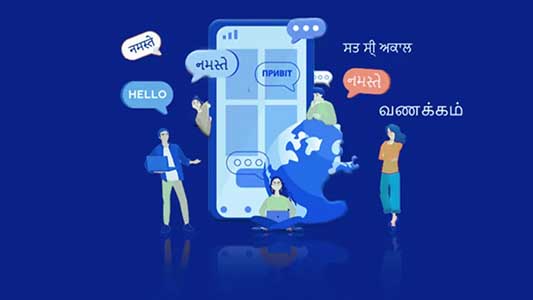
India has never been short of ambition. We have built platforms that serve hundreds of millions, deployed digital public infrastructure at unprecedented scale, and shown the world what population-level technology adoption looks like. But as we celebrate this progress, there is a quieter truth we don’t talk about enough. Most Indians still experience the internet as a foreign place.
Over 65 percent of India’s internet users prefer consuming digital content in their native language yet less percent of online services meaningfully support Indian languages beyond English and Hindi. This gap is not a marginal statistic; it defines the central challenge of India’s digital journey. As India moves toward a trillion dollar digital economy the question is no longer whether technology can scale but whether it can include. From a founder’s vantage point multilingual systems are no longer a product feature; they are fast becoming core national infrastructure.
India has built world class digital public platforms. UPI processes over 10 billion transactions a month, Aadhaar has enrolled more than 1.3 billion citizens and government services are increasingly digital by default. Yet on the ground a large section of citizens still depend on intermediaries to access these systems. The reason is simple and persistent language. Digital systems may be available but they are not always understandable.
The most visible problem today is access friction. Farmers struggle to navigate portals written in unfamiliar languages. Small merchants hesitate to adopt digital tools that do not speak the language of their business. Citizens abandon online grievance systems because typing or reading in English is intimidating. This is not a technology failure, it is a design failure. India digitized services faster than it localized them.
The expected solution is becoming clearer by the day. Language native and voice led interfaces can dramatically reduce access barriers. When a user can speak to a system in Marathi Tamil or Assamese and receive accurate contextual responses the relationship between citizen and technology fundamentally changes. Adoption stops being forced and starts becoming organic.
From a founder’s lens this shift is also economic. India’s next wave of digital growth will come from tier two and tier three markets, MSMEs and informal enterprises. These businesses operate in local languages, not boardroom English. Language first systems enable them to onboard customers, manage compliance and access finance without translation layers or human dependency. That efficiency compounds at population scale.
There is also a deeper strategic dimension. If India’s digital future depends entirely on systems built elsewhere optimized for other societies we risk importing bias and excluding local nuance. Building Indian language intelligence is not about nationalism it is about relevance, trust and resilience. Language carries context, culture and intent. Ignoring that weakens systems meant to serve citizens.

What is encouraging is that the ecosystem is responding. Public platforms focused on Indian languages’ increased investment in local language data and startups building voice first solutions point to a growing recognition that language inclusion is foundational not decorative. The challenge now is execution at scale moving from pilots to daily use.
In the coming decade multilingual systems will quietly sit underneath governance commerce, healthcare and education much like payments infrastructure does today. Users may never notice it but they will feel its absence immediately if it fails.
Digital India will not be judged by how advanced its systems are but by how many people can use them without fear or friction. In that future multilingual capability will not be an innovation headline it will be the backbone.