


The world is increasingly focusing on energy efficiency and sustainability. This has changed the way how modern buildings are designed and operated. Intelligent building automation technologies (IBAT) integrates advanced sensors and software for optimizing the use of energy and enhancing the comfort of occupants. These solutions enable the automation of key business functions such as lighting, HVAC, security, and energy management. This article explores the essentials of IBAT systems. It also details the key factors driving the intelligent building automation technologies market demand.
Intelligent Building Automation Technologies: Introduction
IBAT is an integrated system that combines advanced hardware and software. Networked devices are also a part of this system. IBAT automates the monitoring and control of all the essential functions of a building. It uses technologies such as Internet of Things (IoT) and artificial intelligence (AI) for enhancing the performance of buildings. IBAT combines sensors and control systems through centralized platforms to improve decision making. The intelligent coordination enabled by IBAT allows for reduced consumption of energy. It also helps in meeting sustainability goals.
Types of Intelligent Building Automation Technologies
Building Management Systems (BMS)
BMS is an important element of intelligent automation. Various building subsystems, such as HVAC and lighting, are integrated into one platform here. This allows for real-time monitoring and control. Modern BMS systems make use of IoT connectivity and data analytics for improving energy efficiency and reducing maintenance costs. They also support predictive maintenance and allow facility managers to anticipate issues in equipment before they occur.
Energy Management Systems (EMS)
These systems focus on the optimization of the energy performance of buildings. They do so through real-time tracking and control. EMS monitors energy consumption patterns and detect inefficiencies. Also, they can automatically adjust the usage of power by assessing occupancy and weather data. EMS solutions are important for achieving targets about sustainability. They are also needed to comply with stringent building energy codes. This makes them important tools for smart commercial and residential facilities.
Security and Access Control Systems
Intelligent security systems integrate advanced surveillance and biometric authentication. The integration ensures safety without compromising on performance. The ability to link these systems with other building automation functions enables an environment that’s seamless and secure. AI-based analytics allows for the detection of unusual activity. Cloud connectivity makes remote monitoring and control possible from anywhere.
Smart Lighting and HVAC Systems
Automated lighting and HVAC systems are important for enhancing comfort while reducing the consumption of energy. The use of sensors detecting occupancy and daylight allows these systems to make automatic adjustments for efficiency optimization. Integration with BMS platforms makes coordinated control across different zones possible.
View More Information @ https://www.polarismarketresearch.com/industry-analysis/intelligent-building-automation-technologies-market/request-for-sample
Major Market Metrics
- Polaris Market Research has done an in-depth assessment of the rapidly growing intelligent building automation technologies market.
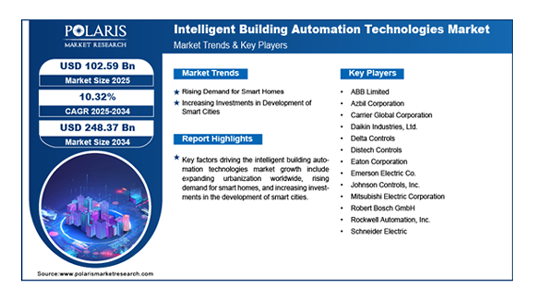
- The report reveals the market for IBAT stood at USD 93.61 billion in 2024.
- It is projected to account for a CAGR of 10.32% from 2025 to 2034.
Market Growth Drivers
Growing Focus on Energy Efficiency and Sustainability
There has been an increased emphasis on energy conservation and environmental responsibility. Rising energy costs and tightening climate regulations have prompted organizations to adopt smart automation systems. These systems can monitor and reduce the consumption of energy in real time. They make use of advanced sensors and lighting for the automatic adjustment of lighting and power usage. In addition, the need to comply with international regulations have prompted developers to invest in intelligent energy management systems.
Urbanization and Smart City Development
The pace of urbanization is increasing. This has increased the need for smarter and more efficient infrastructure. Intelligent building automation is important in smart city ecosystems. It allows for interconnected and data-driven management of residential and commercial buildings. The incorporation of these technologies is increasingly being done by governments and municipal authorities into large-scale urban development projects. With these technologies, authorities aim to improve energy efficiency and reduce pollution.

Rising Demand for Occupant Comfort and Safety
Buildings are becoming increasingly people-centric. This has made comfort and health the key priorities. Intelligent building systems make sure that indoor environments are optimal. They do so through smart HVAC management and automated air purification. There are also dynamic adjustments to lighting that are responsive to natural light levels and occupancy.
Conclusion
The intelligent building automation technologies market is evolving. It is becoming a cornerstone of future-ready infrastructure. The combination of energy efficiency and occupant comfort in these systems are changing the way buildings interact with their environment. With growing global efforts towards sustainability and digital transformation, intelligent automation will be important in making buildings more connected and efficient.