



By: Kigen
Connected products need connectivity that can evolve throughout their operational life. Kigen brings together eUICC operating systems, remote SIM provisioning, OTA capabilities, SIM applets and secure data generation to help manufacturers and service providers build, deploy and manage connected devices. From manufacturing to field operations, these capabilities support flexible connectivity and stronger device security.
1. SGP.32 eIM: Simplifying IoT Connectivity Management
Kigen’s eSIM IoT remote Manager (eIM), aligned with GSMA SGP.32 specifications, enables remote management of operator profiles across IoT device fleets. It supports profile download and lifecycle operations, helping businesses change connectivity providers without physically replacing SIMs.
Together with Kigen Pulse, the solution provides centralized visibility and control through a management interface and APIs. Support for indirect profile download addresses the needs of bandwidth- and power-constrained devices. For smart meters, asset trackers and industrial equipment, this provides a practical route to managing connectivity as coverage needs and commercial requirements change.
2. OTA: Keeping Deployed SIMs Up to Date
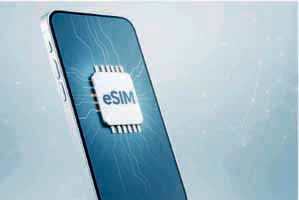
Over-the-Air (OTA) management enables authorized updates to SIM files, settings and supported applications after devices have been deployed. Secure remote commands allow operators and service providers to adjust network preferences, update service parameters and manage compatible applets without physical access to the SIM.
OTA complements eUICC remote SIM provisioning: profile management enables subscription changes, while OTA maintains supported data and applications within the deployed SIM environment. Used together, these capabilities help reduce maintenance visits and support evolving service requirements throughout the device lifecycle.
3. eUICC Products: Connectivity That Can Adapt
Kigen’s eUICC operating systems (GSMA eSA certified) provide the secure foundation for remotely provisionable eSIM solutions. By enabling operator profiles to be downloaded and managed after deployment, eUICC technology gives manufacturers greater flexibility in how products are connected and supported.
Manufacturers can simplify product logistics and adapt connectivity to destination markets, available networks and customer requirements. Combined with compatible hardware and provisioning infrastructure, Kigen’s eSIM portfolio supports connected products ranging from industrial sensors and smart meters to consumer devices. The result is greater freedom to evolve connectivity without replacing the physical SIM.
4. SIM Applets: Adding Security and Connectivity Intelligence
SIM applets extend the role of the SIM beyond subscriber authentication, adding application security and configurable connectivity behavior within its secure environment.
The IoT SAFE applet—IoT SIM Applet For Secure End-to-End Communication— allows the SIM to act as a hardware root of trust for communications between a device and cloud services. It supports stronger application-level security by placing sensitive cryptographic functions within the SIM’s protected environment.

Connectivity applets can also support functions such as multi-IMSI selection, location-based behavior and configured responses to loss of service. These capabilities help tailor connectivity to deployment needs, subject to the selected applet, device integration and operator configuration.
5. SAS-Accredited Data Generation: Trust Begins at Production
Secure connectivity starts with the preparation and handling of subscription credentials. Kigen’s GSMA SAS-accredited data generation service supports the development and delivery of personalized SIM products(UICC and eUICC), providing a trusted foundation for SIM, eSIM and iSIM production.
Services include data generation for (e)SIM personalization, card-image generation for iSIM solutions and profile provisioning support for remote SIM provisioning. Combined with profile development, key exchange and personalization support, these services help partners move from product design to secure production with established processes for handling sensitive subscription data.