



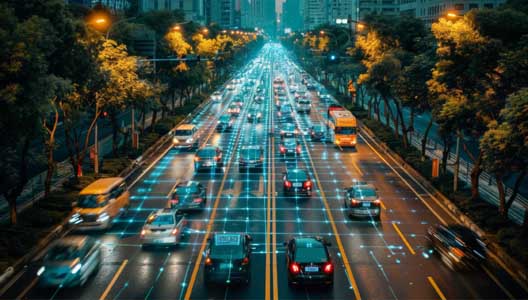

India’s urban roads are a legendary, chaotic dance. From bumper-to-bumper festival traffic to the unpredictable mix of auto-rickshaws, pedestrians, and transit buses, traditional static traffic management systems simply cannot keep up.
Key Behavioral and Structural Vulnerabilities
The Breakdown of Basic Norms: Conceptually, road safety relies on predictable movements. In practice, however, lane driving is virtually non-existent on most Indian roads. The space is treated as a fluid grid where vehicles squeeze into any available gap, regardless of designated lanes.
The Service Road Trap and Wrong-Side Driving: Driving on the wrong side of the road has transitioned from an occasional anomaly to a daily habit. This is especially prevalent on service roads, which are routinely forced into becoming dangerous two-way channels by drivers looking for shortcuts, drastically increasing the head-on collision risk.
Intersection Peril: The most chaotic situations unfold at intersections. When a red signal appears, the collective expectation of a halt frequently fails. Instead, a critical mass of commuters choose to ignore the signal, turning intersections into high-stakes bottlenecks.
The Safety Gear Paradox (Two-Wheeler Fatalities): While wearing a helmet is legally compulsory for two-wheeler riders across the country, enforcement remains highly inconsistent. Statistics consistently reveal that the maximum cause of death among motorcyclists is the failure to wear a helmet. The law exists on paper, but the lack of ground-level implementation translates directly into preventable loss of life.
To transform this gridlock into a synchronized flow, we need more than just better roads- we need cognitive infrastructure. Here is a blueprint for a 7-Layer AI Framework tailored to master the unique complexities of Indian smart cities.
The Architectural Blueprint
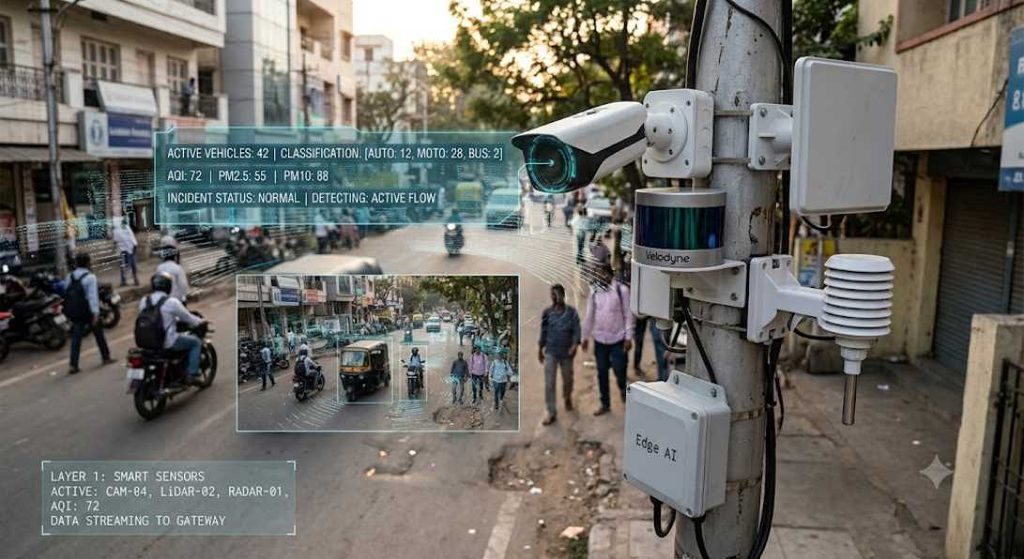
Layer 1: The Sensory Perception (Smart Sensors)
The foundation of the framework relies on a hyper-local, multi-modal network of eyes and ears on the street. Unlike Western cities, Indian roads feature high vehicle heterogeneity.
Computer Vision Cameras: Track mixed traffic flows and detect lane violations.
LiDAR & Radar: Ensure high-accuracy vehicle tracking during monsoon downpours or heavy smog.
GPS & Environmental Sensors: Monitor transit fleet locations while tracking real-time air quality index (AQI) changes at major intersections.
Layer 2: The Digital Conduit (IoT Gateway)
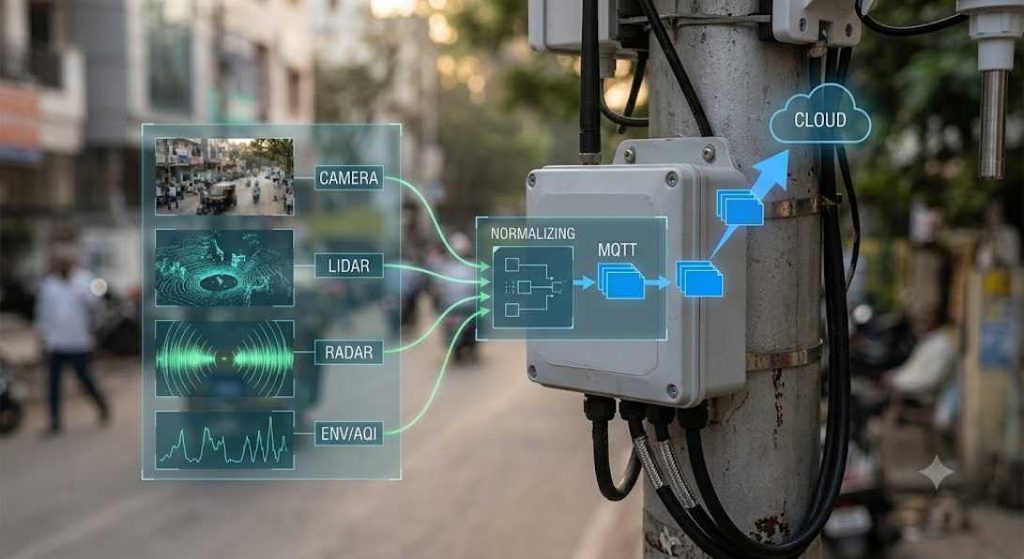
Data without delivery is useless. The IoT Gateway layer acts as the secure, high-speed nervous system of the framework. It aggregates massive streams of telemetry data from Layer 1, normalizes varying data protocols, and ensures seamless transmission even across volatile cellular networks.
Layer 3: Split-Second Refined Thinking (Edge AI Processing)
In traffic management, a delay of a few seconds can cause a kilometer-long bottleneck.
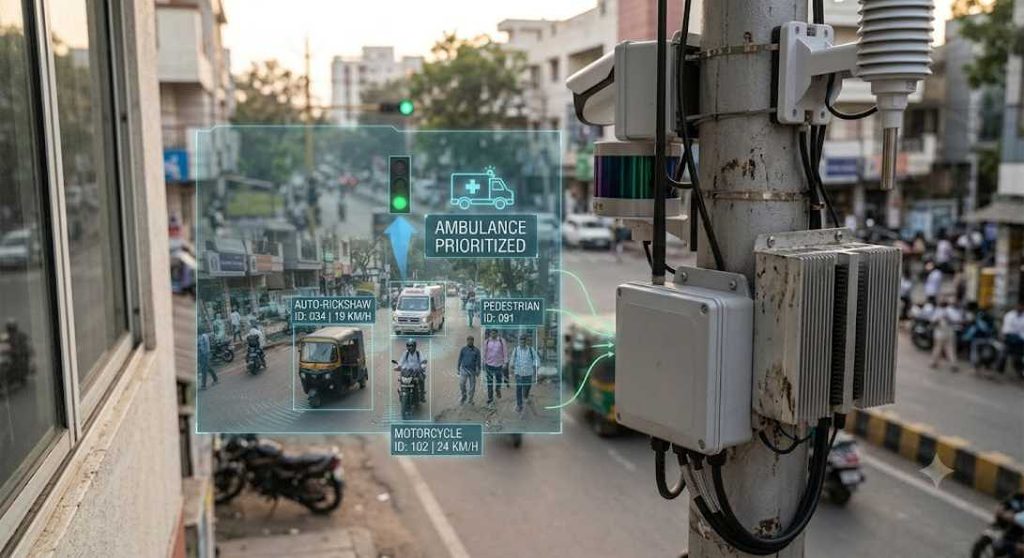
Localized Intelligence: Instead of routing massive video feeds to a distant server, Edge AI processors installed directly at intersections analyze feeds locally.
Instant Action: They identify immediate anomalies- such as an overturned rickshaw or an approaching ambulance- and trigger immediate local signal adaptations.
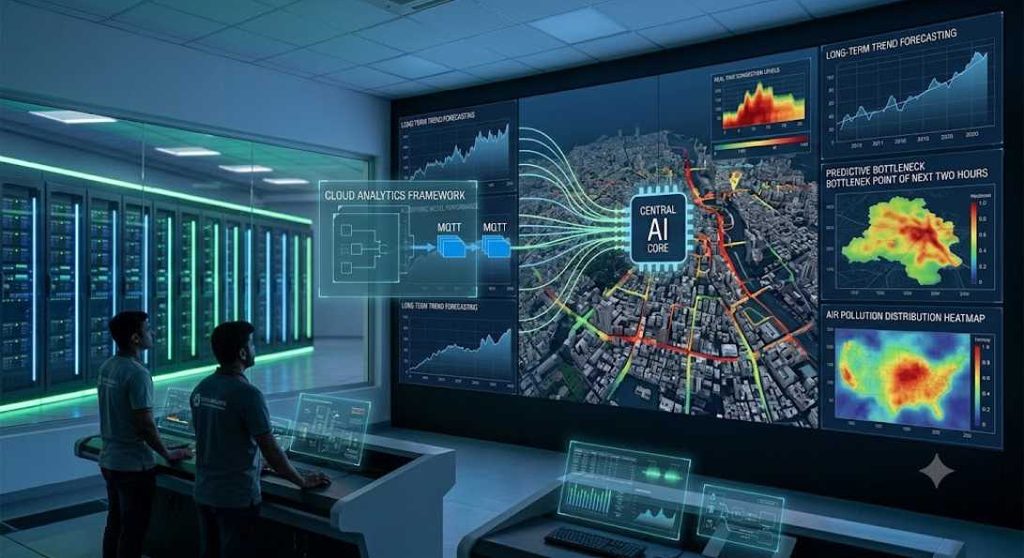
Layer 4: The Brain Trust – Macro Analytics & Command (Cloud-Based AI Analytics)
While the edge handles the now, the cloud plans for the next. This layer pools historical data from across the entire city matrix.
Predictive Modeling: Deep learning algorithms forecast traffic congestion up to two hours in advance.
Macro-Optimization: It spots city-wide trends, adjusting macro timing plans to prevent the dreaded “ripple effect” where one bottleneck chokes an entire sector.
Layer 5: The Nerve Center (Traffic Management Center)
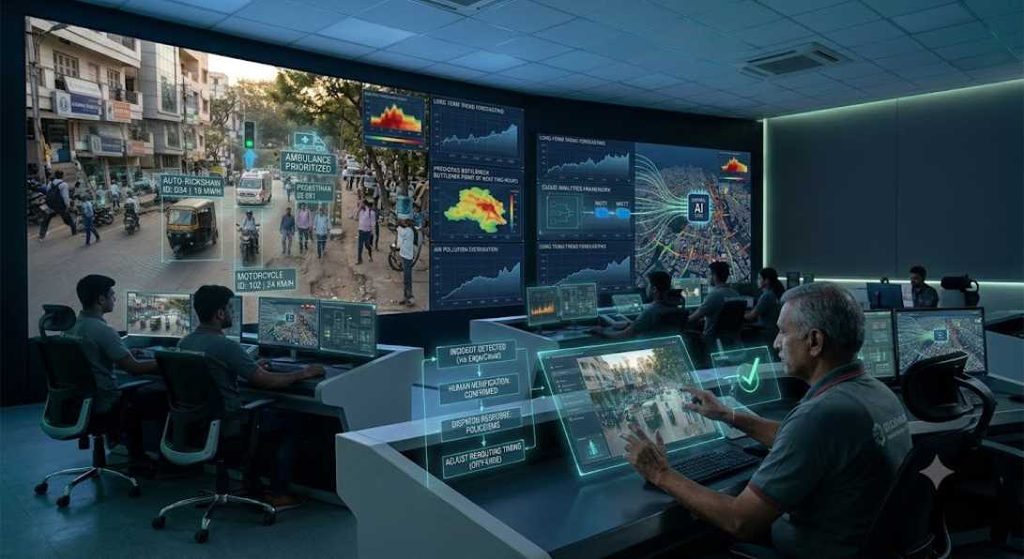
The Traffic Management Center (TMC) bridges artificial intelligence with human authority. AI translates complex data into actionable alerts, allowing traffic police and municipal leaders to coordinate cross-departmental responses to major accidents, VIP movements, or severe waterlogging during monsoons.
Layer 6: Transparency in Action (Smart City Dashboard)
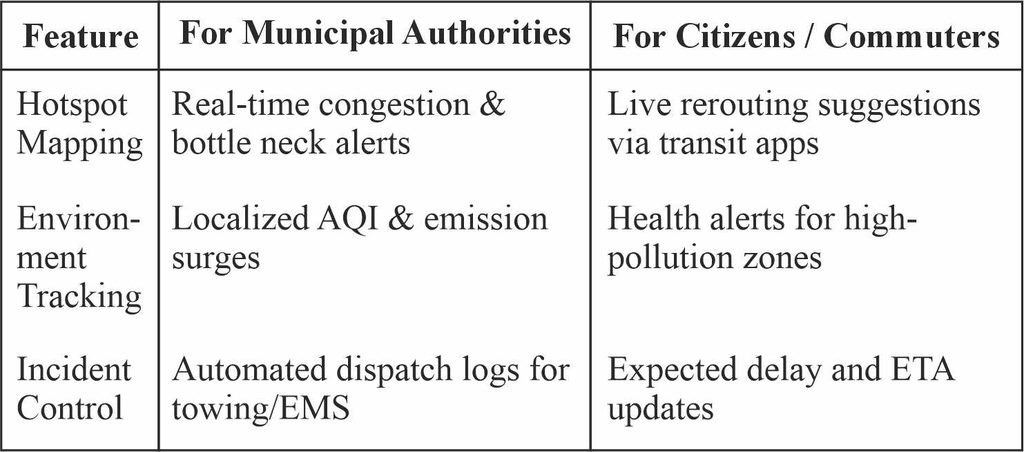
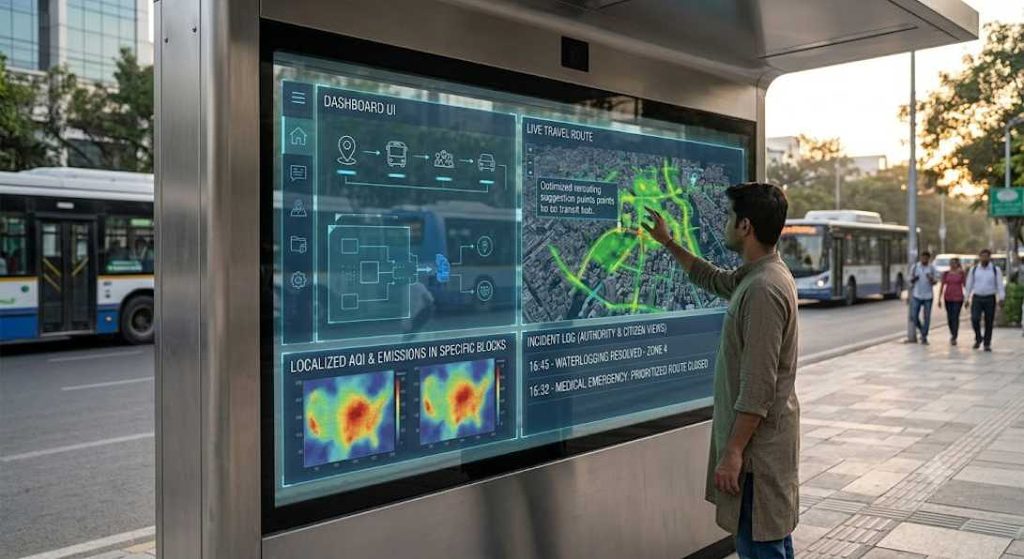
Data shouldn’t be locked in a vault. The Smart City Dashboard visualizes real-time metrics for both administrators and citizens.
Layer 7: Autonomous Decision Support

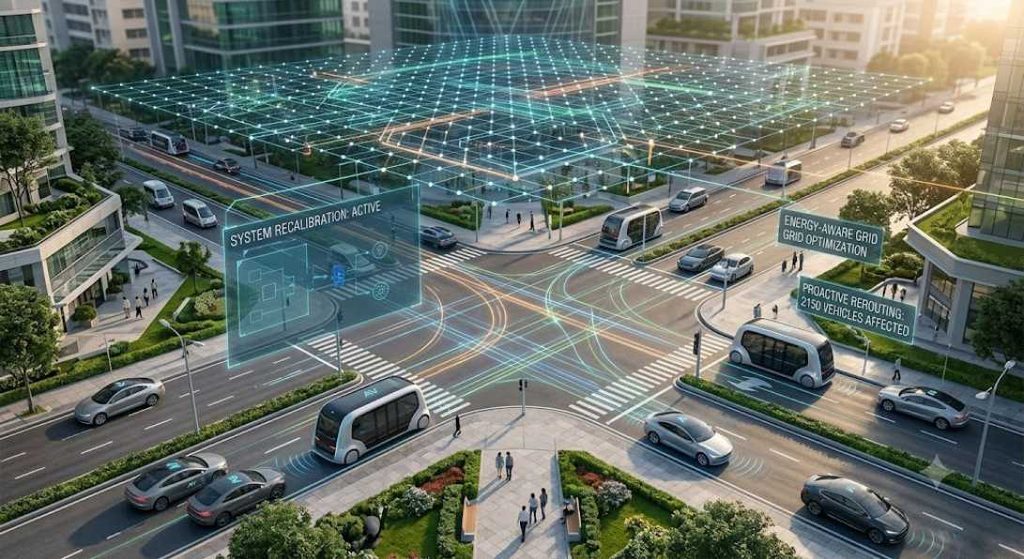
The pinnacle of the framework is a self-healing traffic ecosystem. Layer 7 leverages reinforcement learning to dynamically modify entire transit grids without human intervention.
How it works: If a sudden festival procession clogs a major arterial road, the system automatically recalibrates hundreds of upstream signals, provisions temporary one-way routing updates, and communicates directly with connected vehicle navigation systems to balance the load dynamically.
The Road Ahead
Implementing this 7-layer architecture isn’t just a technological upgrade; it is a necessity for economic productivity and urban sustainability. By blending localized Edge AI with the scale of Cloud Analytics, Indian smart cities can finally transition from reactive firefighting to proactive, autonomous traffic harmony.