



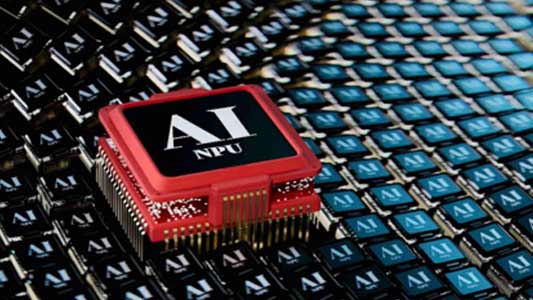
Industrial Transformation for Next-Generation Chip Fabrication
Abstract
As semiconductor devices approach atomic scales, traditional manufacturing paradigms face fundamental quantum and thermal limits. To address this, a new era of Quantum-Aware Semiconductor Manufacturing (QASM) is emerging, one that integrates quantum technologies, Industrial Internet of Things (IIoT) ecosystems, and Industry 5.0’s human-centric philosophy. This redefines semiconductor fabrication as a quantum-informed, data-driven, and sustainable ecosystem, merging physical, digital, and human intelligence.
This article explores the conceptual, technical, and operational dimensions of QASM, emphasizing its transformative role in achieving resilience, precision, and adaptability in future fabs.
Introduction
The semiconductor industry’s continuing push to smaller feature sizes, 3D stacking, and heterogeneous integration increases sensitivity to nanoscale defects, strain, and buried currents. Quantum sensors, especially Nitrogen Vacancy (NV) centre diamond sensors, provide non-destructive, nanoscale mapping capabilities that complement traditional optical and electron-beam metrology [1,2]. Industry demonstrations of qubit fabrication in 300 mm semiconductor lines show that quantum devices are moving from lab prototypes into industrial process flows [3]. Quantum-enhanced analytics (quantum kernels and hybrid quantum-classical methods) have shown advantages in small-sample, high-dimensional semiconductor process modelling [4]. AI-driven feedback systems, when integrated with IIoT connectivity and Industry 5.0 principles, form an intelligent and sustainable fab environment [5].
This represents a paradigm shift from deterministic process control to probabilistic and context-aware manufacturing, where quantum-level phenomena are actively measured and optimized in real time.
Numerous interconnected sensors, robots, and process controllers continuously generate petabytes of operational data. Advanced analytics, powered by AI and edge computing, already optimize equipment uptime, wafer yield, and supply-chain visibility.
As data complexity grows and process precision demands surpass classical computing limits, manufacturers must ask:
What comes after the smart fab?
The answer lies in the Quantum-Aware Fab, where manufacturing infrastructure is specifically designed or adapted to produce quantum devices. A quantum-aware fab modifies fabrication, assembly, and characterization capabilities required for quantum devices, e.g., superconducting circuits, photonic qubits, and spin qubits. It consists of IIoT systems, quantum computing, quantum sensors, and quantum-secure networks.
Quantum-Aware Manufacturing through Turning Quantum Limits into Tools
t the core of QASM lies the principle of quantum awareness, the recognition and utilization of quantum phenomena within semiconductor production. Technologies such as Nitrogen Vacancy (NV) center sensors in diamond and quantum dots enable detection of magnetic and electric field fluctuations at the atomic scale, providing unparalleled insight into thin-film uniformity, dopant distribution, and lattice stress [6].
These sensors can be integrated into deposition, etching, or lithography tools, providing real-time metrology with sub-angstrom sensitivity. Combined with AI-enhanced process analytics, fabs can predict yield-impacting anomalies before they occur.
Furthermore, quantum digital twins, virtual replicas of physical processes built on quantum computing frameworks, can simulate molecular interactions and chemical reactions in material growth [7]. These simulations drastically shorten development cycles, allowing material recipes and device architectures to be optimized with quantum-level accuracy.
IIoT as the Digital Nervous System of Quantum-Aware Fabs
he Industrial Internet of Things (IIoT) provides the data infrastructure for QASM. Every process chamber, wafer handler, and metrology tool becomes a smart node capable of edge sensing, real-time communication, and machine-to-machine collaboration [8]. A quantum-enhanced IIoT network extends beyond conventional sensor arrays to include quantum sensors and photonic communication channels. These collect and transmit multidimensional data from nanoscale electric potentials to temperature gradients, which are analyzed by AI-powered digital twins.
In this environment, IIoT acts as a real-time feedback mesh, allowing quantum-aware sensors, robotic systems, and human operators to coordinate seamlessly [9]. Blockchain-enabled data chains further ensure secure traceability and intellectual property protection across distributed fabs. This architecture transforms the smart semiconductor fab into a self-aware, data-synchronous ecosystem capable of predictive maintenance, energy optimization, and autonomous yield tuning.

Industry 5.0 as a Human-Centric and Sustainable Intelligence
While Industry 4.0 emphasized automation, connectivity, and cyber-physical systems, Industry 5.0 refocuses on human-centric collaboration, sustainability, and resilience [5]. In a quantum-aware fab, engineers no longer merely supervise machines; they collaborate with intelligent agents that interpret complex quantum data and suggest optimal control actions.
Through augmented reality (AR) and digital twin visualization, human operators interact directly with quantum-informed data models. This synergy enhances intuition-driven engineering, enabling faster problem-solving and adaptive learning.
Quantum-optimized simulations can minimize material waste, while IIoT-enabled energy monitoring ensures process efficiency. Circular economy principles are applied to wafer reuse, packaging materials, and cooling systems. Collectively, these align the quantum-aware fab with ESG (Environmental, Social, Governance) and net-zero manufacturing goals [10].
Quantum Aware Industry 5.0 Ecosystem
The integration of quantum awareness, IIoT infrastructure, and Industry 5.0 human-centricity results in a holistic manufacturing paradigm [11]. In such ecosystems:
• Quantum sensors continuously map process parameters with atomic precision
• IIoT networks synchronize global fab operations through cyber-secure data threads
• AI and quantum simulators co-develop process models that predict material behavior
• Human experts guide, interpret, and creatively enhance the system’s decision-making
This results in hyper-adaptive fabs capable of learning, evolving, and self-correcting. Quantum communication and post-quantum cryptography (PQC) ensure cyber-physical security, protecting valuable IP and operational data streams.
Challenges and Future Research Directions
Despite its promise, QASM faces challenges in integration, scalability, quantum hardware maturity, and standardization of IIoT-quantum interfaces. Power consumption of quantum devices, data latency, and error correction remain limiting factors.
Future research must focus on:
• Developing quantum-compatible industrial protocols for IIoT networks
• Creating hybrid AI quantum learning frameworks for yield prediction
• Advancing quantum-safe communication and resilient cloud-edge architectures
Furthermore, human-centered design should remain central, ensuring that Industry 5.0 principles guide the ethical deployment of technology.
Conclusion
Quantum-aware semiconductor manufacturing represents the combination of quantum physics, data intelligence, and human creativity. By interlinking quantum precision, IIoT-driven connectivity, and Industry 5.0 values, fabs evolve into adaptive, secure, and sustainable ecosystems.
This transformation marks the beginning of Quantum-Aware Industry 5.0, a future where semiconductor manufacturing is automated and cognitively symbiotic, blending the strengths of quantum computation, digital interconnectivity, and human insight. The semiconductor industry’s future will depend on how effectively it can harness these converging forces to create intelligent and ethical fabrication systems.
This transformation will require collaboration between semiconductor giants, equipment makers, IIoT vendors, and quantum technology startups. Early adopters who act today, modernizing data infrastructure, experimenting with quantum analytics, and building a quantum-aware workforce, will secure a competitive advantage in the Industry 5.0 landscape.
The quantum-aware fab is not a distant dream… it is the logical evolution of the smart fab. The journey begins now…