



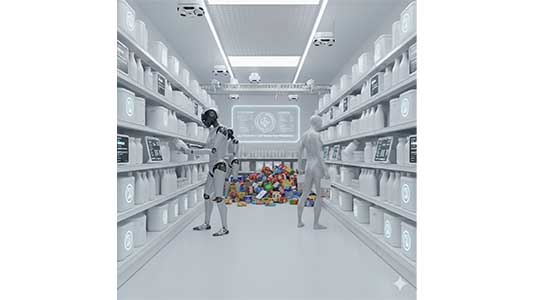
Convenience is paving the way for autonomous agents in the consumer lifecycle. With 64% Indian consumers using Generative AI (GenAI), as per a BCG Report, brands are no longer selling only to people. They have to win over the “second consumer”, the AI agent, which influences how products are discovered and selected.
While AI is becoming more conversational and intuitive for humans, the rules change entirely when an agent is doing the shopping. It does not respond to emotion or recall. Instead, it evaluates products through structured data such as attributes, availability, reviews, price, and relevance to intent. This shift in competitive landscape means smaller brands can outperform larger competitors if they are “agent ready” and understand how AI systems evaluate products. And this gap is more acute than most CPG brands realise, starting with how product listings are created.
If AI Can’t Find You, Are You Visible?
Consumer search behaviour already reflects this with people asking specific questions such as “Give me mid-range options for cotton loungewear.” When we tested a similar query on Amazon Rufus, a global apparel market leader was outranked by a much smaller brand.
This is where even leading CPG companies can face a visibility gap. In our analysis of more than 500 CPG product listings, less than 30% had the complete attribute fields required for AI agent parsing. Missing data carries real consequences, because brands risk losing their top ranking and forfeiting as much as 10% of AI driven referral traffic.
These developments highlight the growing need for brands to treat AI agents as real and influential buyer personas. Product data, content, and marketplace listings must be structured in ways that make them easy for algorithms to interpret, not just appealing to human shoppers. In India, Flipkart’s acquisition of AI startup Minivet to strengthen AI-led discovery signals that the market is preparing.
Rethinking the Marketing Funnel
When an AI agent becomes part of the buying journey, the traditional marketing funnel begins to change in meaningful ways. The most significant disruption occurs in the awareness and discovery stages. Rather than being influenced by marketing campaigns or advertising, the agent immediately evaluates structured data and filters products based on attributes, availability, reviews, and price. Listings that lack complete information are quickly excluded.
Many AI search journeys begin with broad informational queries. For example, users may ask questions such as “How many calories should a healthy breakfast have?” Products that cannot meet the information needs implied by these queries are less likely to be surfaced in recommendations.
During the evaluation stage, the agent can instantly analyse reviews, compare ingredients or specifications, and assess delivery logistics. What once required hours of human research can now occur almost instantly. The checkout stage itself remains relatively unchanged, but the set of products that reach that point is increasingly determined by data readiness rather than marketing strength.
Another important change is the role of brand loyalty. AI agents do not develop loyalty in the traditional sense. Their recommendations depend entirely on the user’s task or need. If another product offers a better match based on attributes, price, or availability, the agent will recommend it even if the consumer has historically purchased a different brand.
Keeping the Second Consumer Happy
For CPG leaders, becoming visible to AI shopping agents requires treating product data as a core element of brand communication. The first step is identifying signals and gaps. Brands need to understand where they stand by conducting data audits that examine relevant trends, consumer insights, and product information. This process includes identifying consumer pain points across product portfolios and comparing performance against competitors.
The next priority is structuring product data with richer attributes. Product titles and descriptions should be optimised so AI systems can easily parse them for comparison and ranking. Standardised attributes such as ingredients, use cases, dietary information, certifications, sustainability claims, and pricing all contribute to better visibility.
Brands must also adapt marketplace listings to align with how AI systems evaluate products. This means regularly updating product descriptions and contextual information so that listings remain aligned with current consumer needs and emerging trends.
Finally, companies should continuously test how their products appear and are interpreted by large language models and retailer embedded agents. Performance analytics should evolve from simple keyword tracking toward intent tracking, which evaluates whether products are being correctly matched to consumer needs.

Winning Over a Dual Audience
AI and agents influenced 20% of global retail sales during the holiday season in just the last two months of 2025, shows a Salesforce survey. This compels marketing strategies to focus on a dual audience model in which every product must appeal to human shoppers and the algorithm guiding purchase decisions. Human consumers are not disappearing, but AI agents are becoming the first filter, the first impression, and in many cases the first decision maker.
Brands that invest in structured product data, complete attributes, contextual content, and continuous optimisation will be more likely to be surfaced and recommended. The future of commerce will belong to brands that can connect with both audiences at once and succeed in winning the confidence of each.