



Cambridge, UK – As communication systems move to higher frequencies (e.g. 5G/6G) and data transfers move to higher rates, minimizing transmission losses and maintaining signal integrity become very important. This is where low-loss materials come in. These materials are crucial for several applications such as 5G mmWave and future 6G telecoms, automotive radar systems, as well as data center infrastructure, such as server switches, transceivers, etc. According to IDTechEx’s forecasts from its latest report on “Low-Loss Materials for 5G/6G, Radar, and High-Speed Digital 2026-2036: Markets, Trends, and Forecasts”, the demand for LLM is expected to grow 7-fold over the next decade. With several different options for low-loss materials available in the market, this article looks at the key properties and factors to consider that guide the selection of materials for high frequency applications.


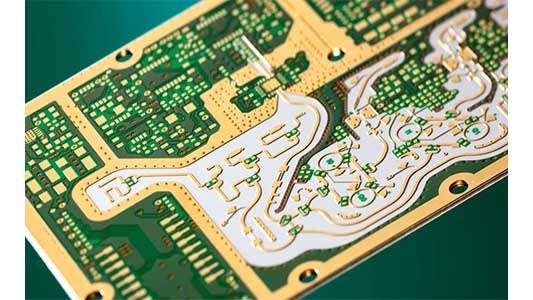
Examples of low-loss materials explored in IDTechEx’s report “Low-Loss Materials for 5G/6G, Radar, and High-Speed Digital 2026-2036: Markets, Trends, and Forecasts”. Source: IDTechEx
Types of Low-Loss Materials
In the market, there are several types of low materials that fall within organic and inorganic categories. Each material comes with its own set of trade-offs between performance, manufacturability, and cost. Organic materials have gained significant popularity for high frequency applications. Examples of these materials include specialized epoxies, polytetrafluoroethylene (PTFE), liquid crystal polymer (LCP), polyphenylene ether (PPE), etc.
On the other hand, inorganic materials like low-temperature co-fired ceramics (LTCC) and glass appear to be progressing more slowly, but have also gained a lot of attention owing to their low moisture absorption and stable dielectric properties.
IDTechEx has spoken to several key material players, including Celanese, Kyocera, and Isola, among others, and highlights in-depth analysis of the key developments and trends in its recently released report “Low-Loss Materials for 5G/6G, Radar, and High-Speed Digital 2026-2036: Markets, Trends, and Forecasts”.

Material Properties: The Metrics of Performance
Low-loss materials are engineered with low and stable dissipation factors or loss tangents (Df) and dielectric constants (Dk) to ensure optimal performance for radio frequency (RF) including millimeter wave (mmWave) for telecommunications (5G, 6G) or radar systems. These dielectric properties are also key enablers for high-speed circuitry, such as those used for data center infrastructure (transceivers, switches, etc.). For example, it is important to select dielectric materials that have a stable Dk over the operational frequency range as variation in Dk can lead to unstable impedance, resulting in signal distortion.
Generally speaking, organic materials have a wide range of Dk and Df values depending on the composition (e.g. resin type, blends, and content, fillers, additives, etc.). Inorganic materials (e.g. LTCC) typically have high Dk values, however, the Df values are low and stable over a wider frequency range. Organic and inorganic materials are also composited to increase mechanical strength and properties (e.g. PTFE materials composited with ceramics, glass, etc.).
When selecting materials, it is also critical to consider the mechanical and thermal properties to ensure performance and manufacturability, and the cost to maintain overall competitiveness across different applications.
One key property is the coefficient of thermal expansion (CTE). A mismatch in CTE between the substrate materials can lead to delamination, cracking or warping under thermal cycling, and lead to reliability issues. For copper clad laminates used in printed circuit boards (PCB), it is critical to ensure that the CTE of materials match that of copper closely.
Other critical properties include thermal conductivity and moisture absorption, as high thermal conductivity helps dissipate heat efficiently (crucial for high power applications) in addition to stabilizing dielectric properties, while moisture absorption can degrade signal integrity and increase insertion loss. Minimizing roughness of copper foil is also essential to reducing conductor losses owing to skin effects.
IDTechEx’s report deep dives into these critical material properties for high speed and high frequency applications. The report contains benchmarks and analysis of over 150 commercially available low-loss organic, inorganic, and composite materials for PCBs and RF components across properties such as Dk, Df, moisture absorption, CTE, thermal conductivity, etc. In addition, developments in materials for future 6G applications are also covered.
The Road to 2036: Low-Loss Materials
With 77-79GHz automotive radar becoming standard for safety, continued roll-out of 5G, and 6G eventually pushing us into sub-THz range, the challenge for the next decade is not just achieving the lowest possible dielectric loss, but doing so at scale, with processable and stable materials, at a manageable cost.
IDTechEx’s report “Low-Loss Materials for 5G/6G, Radar, and High-Speed Digital 2026-2036: Markets, Trends, and Forecasts” offers an independent and comprehensive analysis of market trends, examining key technologies and application areas driving demand for low-loss materials. Drawing on primary research, the report delivers insights into industry developments, analyzes leading market players, and benchmarks products across critical material performance characteristics. The report also includes 10-year demand forecasts segmented by application and material type.
For more information on this report, including downloadable sample pages, please visit www.IDTechEx.com/LowLossMats, or for the full portfolio of research available from IDTechEx, see www.IDTechEx.com.