

The expectations of consumers have changed as a result of the developments made in e-commerce. Consumers have the baseline expectation of their essential items being delivered within minutes or hours rather than days. This has opened up new avenues for growth, but it has also made the e-commerce sector prone to a whole new set of operational challenges. Businesses are now required to increase the volume of their everyday deliveries and also cover shorter distances. The deliveries are expected within the shortest time lines, and the business owners are also expected to be conscious of the impact of their business practices on the environment.

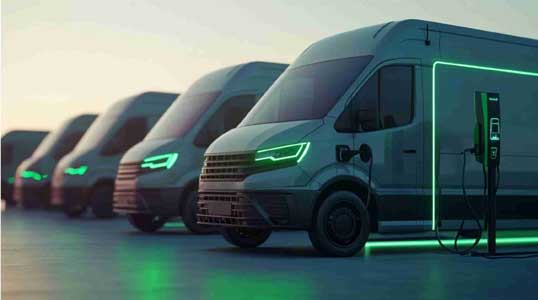
Customers have also become more aware of their environmental responsibilities, and businesses are taking up new initiatives to safeguard the environment. Therefore, the scope of these practices has expanded to become a business imperative. The modern quick commerce businesses are increasingly making use of tech-enabled commercial electric fleets (EVs). In this way, companies can expand their operations without compromising on their sustainability goals.
New Mobility Model As A Part of Quick Commerce
Traditionally, the hyperlocal deliveries had remained dependent on internal combustion engine (ICE) vehicles. The conventional modes of quick commerce continue to become less and less relevant for the urban delivery ecosystem. This happens as a result of the rising fuel prices, the pressure to reduce carbon emissions, the increasing costs of maintenance, and frequent stop-and-go driving. Commercial electric vehicles have emerged as a promising solution to these problems.
According to the International Energy Agency (IEA), more than 20 million electric cars were sold globally in 2025, accounting for around one in four new car sales worldwide.
Quick commerce deliveries usually happen over short distances. Electric fleets are suitable for this purpose because they can complete their everyday routes while using less energy than traditional fuel-based vehicles. They have a lower operational cost and zero tailpipe emissions. This makes them a suitable choice for those businesses that are seeking long-term operational efficiency. Therefore, real change would not only mean switching from petrol or diesel vehicles to electric ones. It would also mean creating a mobility system that is more intelligent and technology-driven. It should be able to optimise every step of fleet management.
The Role of Technology
Electric mobility does not just mean the usage of battery-powered vehicles. The modern commercial EV platforms have made it possible to bring together a sophisticated digital infrastructure. It has enabled the organizations to manage their operations in real time. They make use of fleet management software, which gives them complete visibility over vehicle utilisation. They can also judge other aspects such as route efficiency, driver performance, schedules, and battery health. They can also monitor fleet performance through a centralised dashboard.
This efficiency is further enhanced by artificial intelligence, which recommends an optimal time for delivery and routes that are based on the traffic conditions, battery levels, priorities of the customer, and delivery density. The potential vehicle issues are identified by the predictive management systems. As a result, they help avoid potential costly breakdowns and help reduce downtime. This ensures maximum fleet availability.
All of these capabilities together have helped transform the commercial fleets.
The Bringing Together of Profitability with Sustainability
It has been a common misconception that electric vehicles only focus on sustainability and often affect the profitability of the companies. As compared to traditional vehicles, electric vehicles have fewer moving parts, which results in lower maintenance requirements. The fuel expenses are eliminated, and they are replaced with predictable electricity costs. Over their entire lifetime, the acquisition costs of the electric vehicles can result in significant savings. This proves to be beneficial for companies that are expected to deliver hundreds of thousands of orders on a daily basis. These lower running costs are able to improve the margins and also reduce the carbon emissions.
As per reports, “By 2035, the global EV fleet is expected to exceed 450 million vehicles under current policy scenarios.”
In this way, organizations are able to fulfill the Environmental, Social, and Governance (ESG) requirements. They are able to achieve both sustainability and cost optimisation. It allows the companies to scale more responsibly.
How Are They Able to Meet ESG Requirements Across The Entire Supply Chain?
The fulfillment of environmental responsibility is no longer limited to the sourcing or manufacturing department. Businesses are now expected to reduce their emissions across the entire supply chain. As a result, the large-scale retailers, food delivery platforms, and e-commerce companies are now setting ambitious net-zero targets. Logistics is considered to contribute a large portion to the urban carbon emissions. Therefore, by making a move from delivery fleets to electric mobility, companies can make their practices more sustainable. As the commercial EV platforms become more tech-enabled, they can make the ESG reporting more accurate.
Companies are able to get reliable data regarding energy consumption, distance travelled, and vehicle utilisation. As a result, companies are able to avoid the estimated carbon emissions. Organizations are able to achieve their sustainability goals with an increased level of confidence.
The Future of Urban Mobility
We can witness a rapid transformation in urban transportation. Governments across the world are now investing in charging infrastructure and also introducing cleaner mobility policies. Commercial fleet electrification has been supported through regulations and incentives. With the integration of superior technology, the driving range has now expanded, the charging times have improved, and the vehicle performance is also better than before. Over the coming years, the adoption of electric fleets will also become much easier. By starting this adoption today, enterprises will become better equipped to adapt to regulations. The risks associated with fuel volatility will reduce, and the company’s credentials related to sustainability will also be strengthened.