
Tokyo, Japan – Toray Industries, Inc., announced today that it has developed a new technology that reduces optical retardation (see note 1) in biaxially oriented polyester film (note 2) to industry-leading low levels (note 3). Films incorporating this technology have a retardation of 200 nanometers or less when viewed head-on (note 4), just one-tenth that of films made using conventional technology. This breakthrough also reduces thickness-direction retardation (note 5) and improves retardation uniformity across the film width.
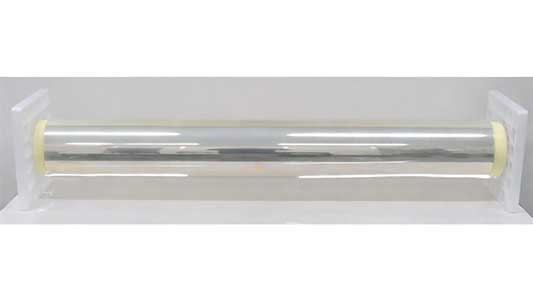
Figure 1. Roll of the developed film incorporating this technology

Biaxially oriented polyester film offers high strength, dimensional stability, and excellent processability, making it suitable for packaging, industrial materials, and electronic components. Its use on display surfaces remains limited. This is because viewing displays through polarized filters, such as those of sunglasses, can produce rainbow mottling.
High optical retardation causes this effect. The stretching needed to strengthen and stabilize the film increases retardation, while variations in stretching across wide films make it hard to ensure uniform retardation.
Toray tackled these challenges by refining its biaxial stretching process and developing a proprietary multilayer structure incorporating a special low-retardation polyester layer. These advances reduced retardation to 200 nanometers or less when viewed head-on and lowered retardation in the thickness direction, suppressing rainbow mottling regardless of viewing angle. The company made retardation more uniform across wide films, overcoming the limitations of conventional biaxially oriented polyester film. The company will develop technology for mass production.
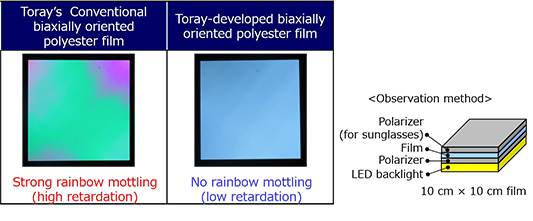
Figure 2. Features of the developed film incorporating this technology
Toray’s new biaxially oriented polyester film combines low retardation, low moisture permeability, and resistance to repeated bending, a combination difficult to achieve with conventional optical films for displays. These properties make it promising for displays requiring dimensional stability under changing humidity and durability under repeated flexing, as well as for components in sensors using polarized light.
Toray will continue developing materials and production technologies that fully leverage polyester film’s properties, in keeping with its commitment to delivering new value and contributing to social progress.
Notes
- Optical retardation measures differences in how light travels through a film due to molecular orientation.
- Biaxially oriented polyester film is made by stretching it lengthwise and widthwise to give it high strength, dimensional stability, and processability.
- Toray based this assessment on its research as of November 2026.
- Head-on viewing means looking at a film surface perpendicular to it.
- The thickness direction refers to the direction through the film’s thickness, as seen in a cross-sectional view.