

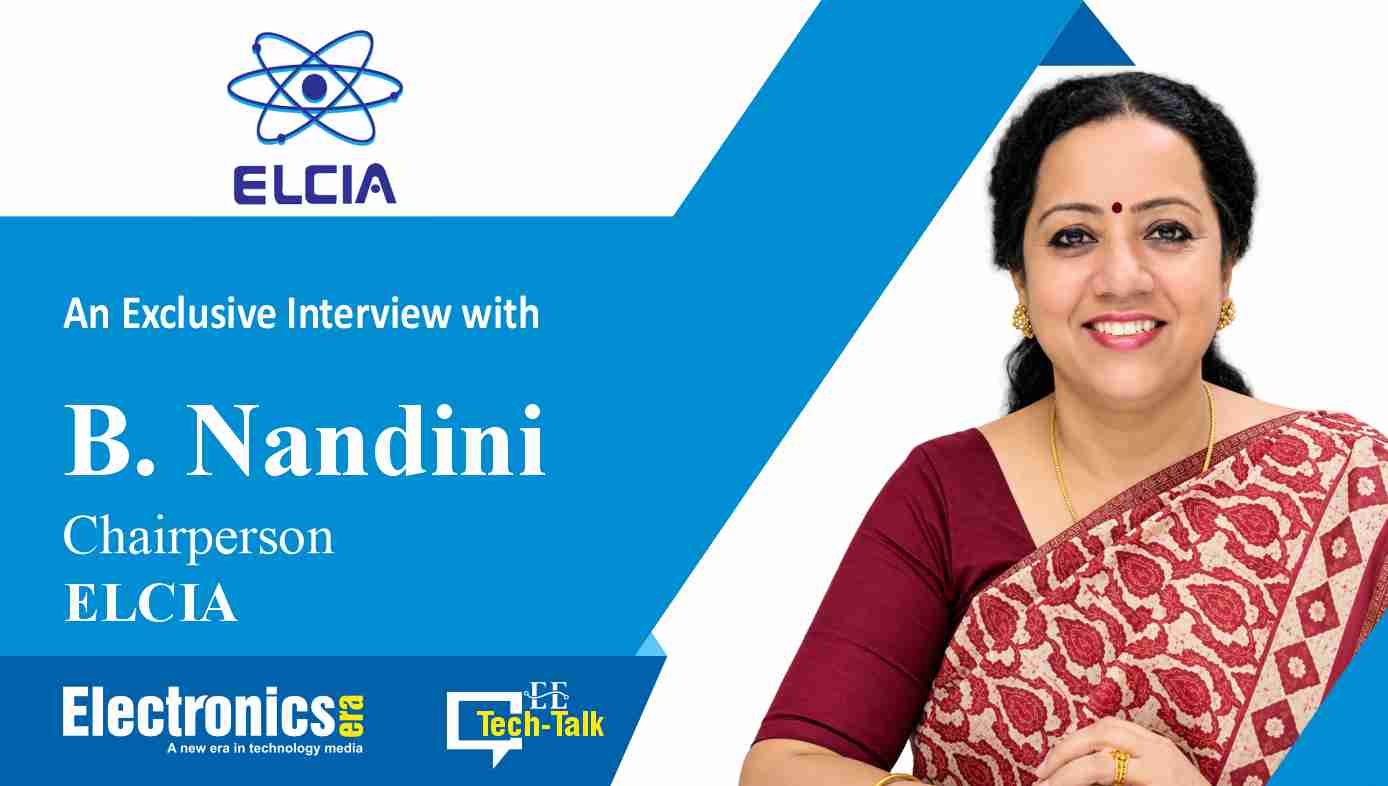
Electronics Era: Electronics City has evolved into a major hub for electronics, IT and technology-driven businesses. How would you describe its current strengths and the capabilities that distinguish it from other industrial and technology clusters in India?
B. Nandini: Electronics City started as one of India’s first planned electronics estates. Today more than 300 companies and around 300,000 people work here.
The first thing that sets us apart is the mix of companies. Global technology leaders, IT services firms, EMS providers, design houses and MSMEs all work within a few kilometres of each other.
The second is how the estate is run. Electronics City is an industry-managed township. Companies pay their taxes to the township, and that money goes back into roads, water, safety and sustainability.
The third is how we work together. ELCIA, ELCIA Trust, the ELCIA Cluster, our skill development initiatives and ELCITA operate as one ecosystem.
Above all, our greatest strength has always been the people who make it what it is: the companies, the employees and the members who give their time.
Electronics Era: The ecosystem brings together large enterprises, MSMEs, electronics manufacturing services (EMS) providers, design companies and technology innovators. How does this diversity create opportunities for collaboration and business growth?
B. Nandini: Here, a company rarely has to look far for what it needs. A large enterprise can find a design partner, a manufacturer and a supplier inside the same estate. An MSME can find its first major customer next door. A startup can test an idea with a company big enough to adopt it.
ELCIA’s role is to make these connections happen. We do it through member forums, the ELCIA Tech Summit, ELCIA pavilions at industry exhibitions and the common facilities of our cluster. When an OEM, an EMS provider and a design company sit in the same room, projects move faster and costs come down. Growth here is shared growth.
Electronics Era: With global companies increasingly expanding their Global Capability Centres in India, what advantages can Electronics City offer to organisations looking to establish or scale their GCC operations?
B. Nandini: From day one, a GCC needs talent, space, safety and a working ecosystem. Electronics City offers all four.
Much of our workforce lives around the estate, so hiring here does not mean asking people to relocate. The Yellow Line metro now connects us to the rest of the city. Through the ELCIA Cluster, GCCs can use common testing facilities and centres of excellence instead of investing capital in their own.
Manufacturing, design and engineering companies are already here. GCCs in automotive, aerospace, semiconductors and Industry 4.0 can work close to the hardware and the supply chain. Few technology clusters in Bengaluru can offer that.
Electronics Era: Beyond Bengaluru’s talent pool, what infrastructure, industry connections and operational advantages make Electronics City an attractive destination for global businesses?
B. Nandini: Infrastructure. We have metro access, the elevated expressway to the city and NICE Road connectivity to the west of Bengaluru.
Safety. The estate has layered security: CISF, state police, township security and company security. It is also a declared no-drone zone.
Sustainability. Electronics City is zero waste to landfill and water positive.
Industry connections. ELCIA has 140+ member companies. We give them a common forum, a bridge to government and industry, and training support for their employees.
Operations. Because industry manages the township, issues get addressed by people who understand business. For any company setting up here, ELCIA is the single point of contact.
Electronics Era: There can be perceptions that established industrial hubs such as Electronics City have limited space for new businesses. How would you address these perceptions, and what opportunities remain for companies looking to establish or expand their presence?

B. Nandini: It is a perception, not the reality. Many people believe Electronics City is full. It is not.
Space here becomes available continuously. New Grade A developments are coming up, and large companies have recently committed to major new campuses in and around the estate. The wider Hosur Road corridor is also growing.
We know the estate well. ELCITA maintains accurate data on occupied and available space, which helps us guide companies to the right location quickly. Our message to the market is simple: Electronics City is open for business.
Electronics Era: ELCITA’s Vision 2040 provides a long-term perspective on the future of Electronics City. What are the key priorities shaping this vision, and what transformation do you envisage over the next 15 years?
B. Nandini: Vision 2040 looks at what Electronics City should be 15 years from now. ELCIA fully supports it. The priorities are clear:
• getting more out of our existing infrastructure
• safety, security and traffic management
• sustainability
• last-mile connectivity
• employee mobility
Electronics City was built in the 1970s. We cannot redesign it from scratch, but we can keep improving it. Over the next 15 years, we want reaching Electronics City to be easy and working here to be safe. We want the estate to become greener and to be recognised as a leading destination for GCCs and high-value technology work.
Electronics Era: What role will collaboration among ELCITA, industry stakeholders, government agencies and infrastructure providers play in realising Vision 2040?
B. Nandini: Collaboration is how Electronics City was built. Industry took responsibility for managing the estate decades ago, and that partnership model is what we will build on.
Each partner has a part to play:
• Industry brings investment, volunteers and a clear view of what companies need.
• Government agencies bring policy support and the push to attract new investment.
• Infrastructure providers deliver the metro, the roads and the utilities.
• ELCIA and ELCITA bring everyone to the same table and keep the plan moving.